

Introduction
Don’t let the small size fool you! The Affenpinscher, with its mischievous, monkey-like face, is a breed packed with personality and a surprisingly rich history. This article dives deep into the Affenpinscher, covering its fascinating origins, essential care tips, effective training techniques, common health concerns, and whether this unique dog is the right fit for you. Intrigued by this ‘Monkey Terrier’? Keep reading to discover everything you need to know!
Quick Overview: Monkey Terrier
| Characteristic | Description |
|---|---|
| Origin: | Germany |
| Size: | Small (23-29 cm tall, 3-4.5 kg) |
| Lifespan: | 12-15 years |
| Temperament: | Confident, humorous, loyal |
| Grooming Needs: | Moderate (weekly brushing, occasional trimming) |
| Exercise Needs: | Moderate (daily walks and play) |
| Training: | Requires patience and consistency |
| Common Health Issues: | Patellar luxation, Legg-Calvé-Perthes disease, progressive retinal atrophy (PRA) |
| Best Suited For: | Experienced dog owners, apartment living |
| Socialization: | Can be reserved with strangers, requires early socialization |
| Exercise Type: | Active play and daily walks |
The Affenpinscher Breed History and Origin
The Affenpinscher’s story begins in 17th-century Germany, specifically in the area of Bavaria. Bred to be ratters in stables and kitchens, their name literally translates to “monkey-like terrier” in German – a nod to their distinctive appearance. Initially, Affenpinschers came in various sizes and colours, but breeders eventually standardised the size we know today.
These little dogs played a crucial role in the development of other breeds, including the Brussels Griffon and Miniature Schnauzer. By the early 20th century, the Affenpinscher made its way to the United States and gained AKC recognition in 1936.
The ‘Monkey Dog’ Look: More Than Just a Funny Face
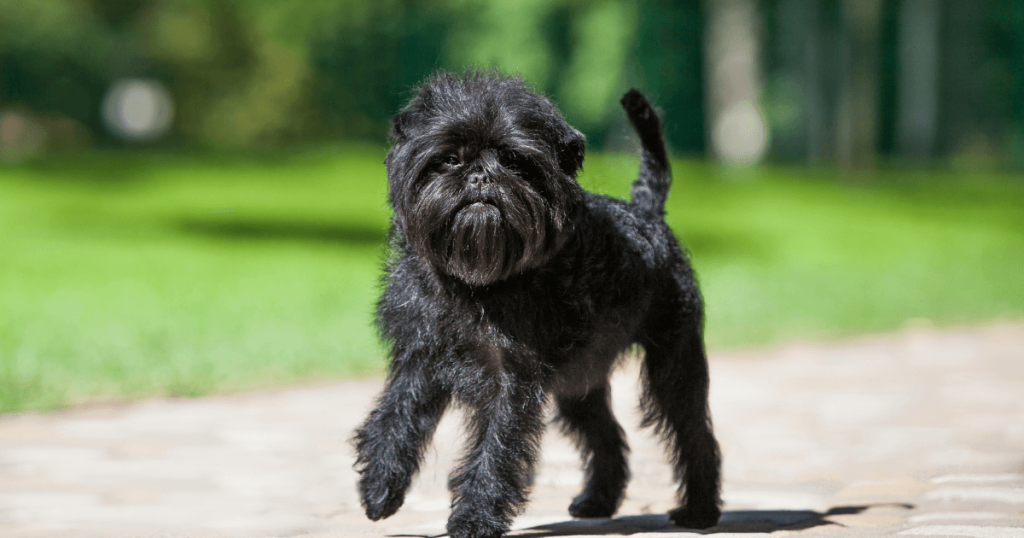
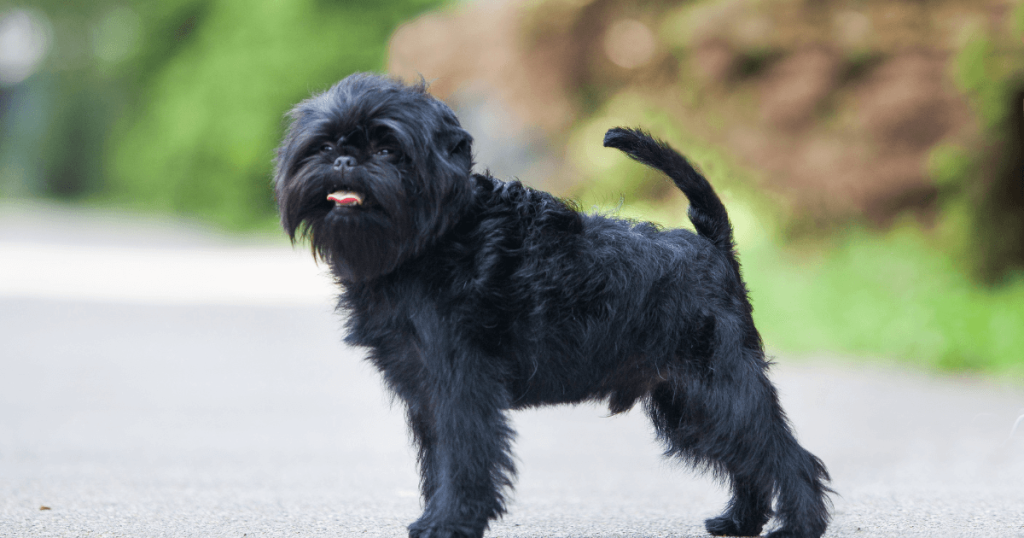
Affenpinschers are small dogs, typically standing between 9 and 11.5 inches tall and weighing between 7 and 10 pounds. Their most distinctive feature is, of course, their monkey-like face: a short muzzle, prominent dark eyes, and a wiry coat that forms a distinctive “mane” around their face. The coat comes in a variety of colours, most commonly black, but also grey, silver, red, and black and tan. The harsh, wiry texture of their coat makes them easily identifiable.
Learn about another monkey faced dog ‘Brussels Griffons‘ in our full guide.
Affenpinscher Temperament and Personality
Confident, lively, curious, and often stubborn – these are the hallmarks of the Affenpinscher personality. They have a reputation for being fearless and playful, showing off their big personalities. While loyal to their families, they can be wary of strangers and may exhibit dominant behaviour towards other dogs if not properly trained.
Pros of having Affenpinscher: Intelligent, entertaining, relatively low-shedding, good watchdogs.
Cons of having Affenpinscher: Stubborn, can be difficult to housetrain, prone to barking, and can be dominant towards other dogs.
Concerned about your Affenpinscher’s health? Try our Pet Symptom Checker
Unlocking the Affenpinscher’s Potential: Training and Socialisation
Affenpinschers are intelligent but independent, making training a test of wills. Early socialisation is crucial to prevent them from becoming overly suspicious or aggressive towards strangers and other dogs. Positive reinforcement techniques work best; avoid harsh methods, which can lead to stubbornness and resistance. Common training challenges include housebreaking, excessive barking, and nipping.
From my experience as a trainer, I’ve found that Affenpinschers respond well to short, engaging training sessions. They have a short attention span, so variety is key. I once worked with an Affenpinscher who excelled at agility training, proving that with the right approach, they can be very trainable.
Keeping the ‘Monkey Terrier’ Happy and Healthy: Exercise and Activity Needs
Affenpinschers have moderate energy levels. They need daily exercise to stay happy and healthy. Suggested activities include walks, playtime in the yard, and interactive games. They also need mental stimulation to prevent boredom and destructive behaviour. Puzzle toys and training exercises are excellent options.
Fueling the Affenpinscher’s Zest for Life: Nutrition and Dietary Needs
Feed your Affenpinscher high-quality dog food that is appropriate for their age and activity level. Because they are small, they are prone to obesity. Measure their food carefully and avoid overfeeding. Puppies need to be fed more frequently than adults. Adult dogs typically need to be fed twice a day.
Maintaining the ‘Monkey Dog’ Look: Grooming and Coat Care
Affenpinschers have a wiry, medium-length coat that requires moderate grooming. Regular brushing is essential to prevent mats and tangles. They should be hand-stripped a couple of times a year to maintain their wiry coat texture. (Clipping is an option, but it will soften the coat.) Bathe them only when necessary, as frequent bathing can dry out their skin.
Staying Healthy: Common Health Issues in Affenpinscher Dogs and Prevention
Affenpinschers are generally healthy dogs but are prone to certain health issues:
- Legg-Calvé-Perthes Disease: A degenerative hip condition.
- Patellar Luxation: Dislocation of the kneecap.
- Progressive Retinal Atrophy (PRA): An eye disease that can lead to blindness.
- Tracheal Collapse: Weakening of the trachea, leading to breathing difficulties.
- Other common diseases: Hip Dysplasia, Luxating Patella, Heart Condtions, Dental issue due to their small mouth.
Preventative care includes regular vet check-ups, a healthy diet, and appropriate exercise.

The prevalence of tracheal collapse in Affenpinschers underscores the importance of using harnesses instead of collars, especially during walks. The pressure from a collar can exacerbate the condition. Genetic testing for PRA is becoming increasingly common, allowing breeders to identify and avoid breeding affected dogs, which should significantly reduce the incidence of this disease in the future.
Looking for the perfect name for your Affenpinscher? Use our Pet Name Generator
Did You Know? Fun Facts About Affenpinschers
- Affenpinschers were once used as “sleeve dogs” by German noblewomen, tucked into their sleeves to keep them warm and rat-free.
- They are known for their distinctive “monkey trot.”
- They are relatively quiet dogs compared to some other terrier breeds.
Who’s the Perfect Match? Is an Affenpinscher Right for You?
Affenpinschers are best suited for owners who are patient, consistent, and experienced with small dogs. They need an owner who can provide them with plenty of attention and socialisation. Affenpinschers can adapt to a variety of lifestyles, but they need daily exercise and mental stimulation. They can be good family dogs, but they need early socialisation to get along well with children.
Owning an Affenpinscher in Australia
The Affenpinscher is considered a rare breed in Australia, with only a small number of specialist breeders.
- Suitability: They adapt well to apartment living, making them ideal for city dwellers.
- Breeders & Clubs: For those interested, check with Dogs Australia and breed clubs such as the Affenpinscher Club of NSW for breeder referrals.
- Lifestyle fit: Their compact size and playful nature make them a good match for Australian households looking for a unique and entertaining companion.

Common Questions About the Affenpinscher: FAQs
What does the name Affenpinscher mean?
It translates from German as “Monkey Terrier,” a nod to their monkey-like expression and terrier roots.
Why is the Affenpinscher called the Monkey Dog?
Because of its expressive, almost human-like face and mischievous personality.
Are Affenpinschers good family dogs?
Yes, they are affectionate and loyal, but they are best suited to families with older children due to their small size and independent nature.
Do Affenpinschers bark a lot?
They are alert watchdogs and may bark at strangers, but with consistent training, their barking can be managed.
Do Affenpinschers shed?
They are low-shedding and require minimal coat maintenance compared to many other breeds.
What health problems do Affenpinschers have?
They can be prone to hip dysplasia, dental disease, luxating patella, and heart conditions. Regular vet check-ups are recommended.
How much exercise does an Affenpinscher need?
A short daily walk and some indoor playtime are usually enough to keep them healthy and happy.
How long do Affenpinschers live?
Most live between 12 and 15 years, with proper care.
Are Affenpinschers rare in Australia?
Yes, they are uncommon, with only a handful of registered breeders nationwide.
What is the personality of an Affenpinscher?
They are bold, cheeky, curious, and affectionate often described as little clowns.
Are Affenpinschers easy to train?
They are intelligent but can be stubborn. Short, positive training sessions work best.
Do Affenpinschers get along with other pets?
They usually get along with other dogs, but their terrier instincts mean supervision is needed around smaller pets.
How big do Affenpinschers get?
Most weigh between 3–6 kg and stand 23–30 cm tall.
Are Affenpinschers suitable for apartment living?
Yes, they adapt well to small spaces as long as they receive daily exercise and mental stimulation.
Do Affenpinschers make good watchdogs?
Absolutely, they are small but very alert, making them excellent watchdogs.
What grooming do Affenpinschers need?
Weekly brushing, occasional trimming, and regular dental care are important.
Are Affenpinschers affectionate?
Yes, they are very loyal to their families and love being close to their people.
What is the origin of the Affenpinscher?
They originated in Germany in the 1600s as ratters before becoming companion dogs.
Are Affenpinschers good with children?
They are better with older children who understand how to handle small dogs gently.
Conclusion: The Unique Charm of the Affenpinscher
The Affenpinscher is a unique and charming breed that can bring a lot of joy to the right owner. With proper training, socialisation, and care, they make wonderful companions. Having observed numerous Affenpinschers throughout my career, I can attest to their unique ability to bond deeply with their owners. Their loyalty and playful nature make them truly special companions.
Do you have an Affenpinscher? Share your story in the comments below! What’s your favorite thing about this ‘Monkey Terrier’?

At Pet Care Community, our team of passionate pet lovers, writers, and veterinary-approved experts share reliable tips, guides, and resources to help you give your furry friends the happiest and healthiest life possible. From dog breeds and training advice to nutrition, wellness, and pet parenting hacks, we’re here to support every step of your journey as a pet parent.