

Introduction
With their soulful eyes, playful demeanor, and incredible sense of smell, Beagles aren’t just dogs; they’re scent-hound superstars and cherished family members. This article dives deep into the Beagle’s fascinating history, essential care tips, effective training strategies, and common health issues to help you provide the best life for your Beagle.
Thinking of bringing a Beagle into your life or want to understand your current companion better? Read on to discover the world of the Beagle!

Quick Overview
| Feature | Description |
|---|---|
| Breed Group | Hound |
| Origin | Great Britain |
| Size | Small to Medium (33-41 cm at the shoulder) |
| Weight | 8-9 kg |
| Lifespan | 12-15 years |
| Temperament | Friendly, Curious, Merry, Intelligent, Exuberant |
| Coat | Short, dense, and hard |
| Colour | Tricolour (Black, White, and Tan), Lemon, Red, White, and various other combinations |
| Exercise Needs | Moderate to High |
| Grooming Needs | Low to Moderate |
| Trainability | Moderate (Can be stubborn, requires patience) |
| Common Health Issues | Cherry Eye, Glaucoma, Hypothyroidism, Intervertebral Disc Disease (IVDD) |
History and Origin
Where It All Began: Tracing the Beagle’s Ancestry
The Beagle breed history and origin is fascinating, shrouded in a bit of mystery. Let’s start with the name. “Beagle” – where does it come from? Some say it’s from the French word “beagle,” meaning “open throat,” referring to their distinctive baying sound. Others believe it originates from the Celtic word “beag,” meaning “small.”
The Beagle breed history and origin can potentially be traced back to ancient Greece and Rome, where small hounds were used for hunting rabbits and hares. These early dogs were the forerunners of many of today’s scent hounds.
The development of the modern Beagle occurred in Great Britain, particularly during the 18th and 19th centuries. Various regional Beagle types were bred for different hunting styles. Reverend Philip Honeywood played a crucial role in standardising the breed.
The breed’s popularity soared in America, spurred by its hunting abilities and charming personality.
Physical Characteristics
What Makes the Beagle Unique? A Physical Profile
Beagles have a compact, sturdy build, designed for endurance and agility in the field. They generally stand between 33 and 41 cm at the shoulder and weigh between 8 and 9 kg.
Their signature tricolour coat (black, white, and tan) is instantly recognisable, but they also come in other accepted colour variations like lemon and red and white.
Those floppy ears aren’t just for show! They help trap scents near the nose, enhancing their already impressive sense of smell. And their large, expressive brown eyes? Irresistible.
The white tip on their tail, often called the “flag,” is bred to allow hunters to easily spot them in tall grass.
There are slight variations in size – 13-inch and 15-inch Beagles – which can influence their exercise needs and how much living space they require.

Temperament and Personality
What’s Their True Nature? Unveiling the Beagle Personality
Beagles are known for their friendly, outgoing, and merry disposition, making them excellent family pets. They’re always up for a game or an adventure. Their inherent curiosity and love of exploration are driven by their strong sense of smell. If there’s an interesting scent, a Beagle will want to follow it!
They are pack-oriented creatures, enjoying companionship and prone to separation anxiety if left alone for extended periods. They thrive when they’re part of a family.
Beagles are intelligent, but they also have an independent streak, which can sometimes manifest as stubbornness during training. Patience is key!
- Pros: Loyal, family-friendly, playful, intelligent, good with children, adaptable to different living situations (with adequate exercise).
- Cons: Prone to wandering if not properly contained, can be stubborn during training, prone to barking, high prey drive.
Training and Socialisation
Raising a Well-Behaved Beagle: Training Strategies and Socialisation Tips
Early socialisation is crucial. Expose your Beagle puppy to various sights, sounds, people, and other animals to help them develop into well-adjusted adults.
Positive reinforcement training methods (treats, praise) work best to motivate them. Beagles are food-motivated, so use that to your advantage!
Recall training can be challenging due to their strong scent drive. Solutions include long-line training and high-value rewards. Make coming back to you the most exciting thing ever!
Manage their barking tendencies by providing adequate exercise and mental stimulation. A tired Beagle is a quieter Beagle. Obedience classes or professional dog trainers can provide consistent and effective training.
Exercise and Activity Needs
Keeping Them Active and Happy: Meeting the Beagle’s Exercise Requirements
Beagles have moderate to high energy levels and need daily physical and mental stimulation. Aim for at least 30-60 minutes of exercise per day.
Activities like brisk walks, runs, hikes, and scent-tracking games can satisfy their natural instincts. A securely fenced yard or leash control is essential to prevent them from wandering off in pursuit of interesting scents.
Puzzle toys and interactive games provide mental enrichment and prevent boredom. Keep their minds engaged!
Weekly exercise planner with suggested durations:
- Monday: 45-minute brisk walk + 15 minutes of fetch
- Tuesday: Scent-tracking game in the park (30 minutes) + short training session
- Wednesday: Rest day (short walk)
- Thursday: Hike in a safe area (1-2 hours)
- Friday: Agility training or dog park visit
- Weekend: Longer hikes, playdates with other dogs, or outdoor adventures.

Nutrition and Dietary Needs
Feeding Your Beagle Right: A Guide to Optimal Nutrition
Choose high-quality dog food formulated for active breeds, with a focus on protein and balanced nutrients.
Puppies need more frequent meals (3-4 times a day) than adult dogs (2 meals a day). Senior dogs may benefit from specialised diets formulated for joint health and weight management.
Portion control is vital to prevent obesity, a common health concern in Beagles. Avoid feeding table scraps, which can lead to digestive issues and weight gain.
Grooming and Coat Care
Caring for Their Signature Look: Beagle Grooming Essentials
Beagles have a short, dense, and water-resistant coat. Weekly brushing removes loose hair and prevents matting. Use a slicker brush or rubber grooming mitt.
More frequent brushing during spring and fall helps manage shedding. Bathe them only when necessary, as over-bathing can dry out their skin.
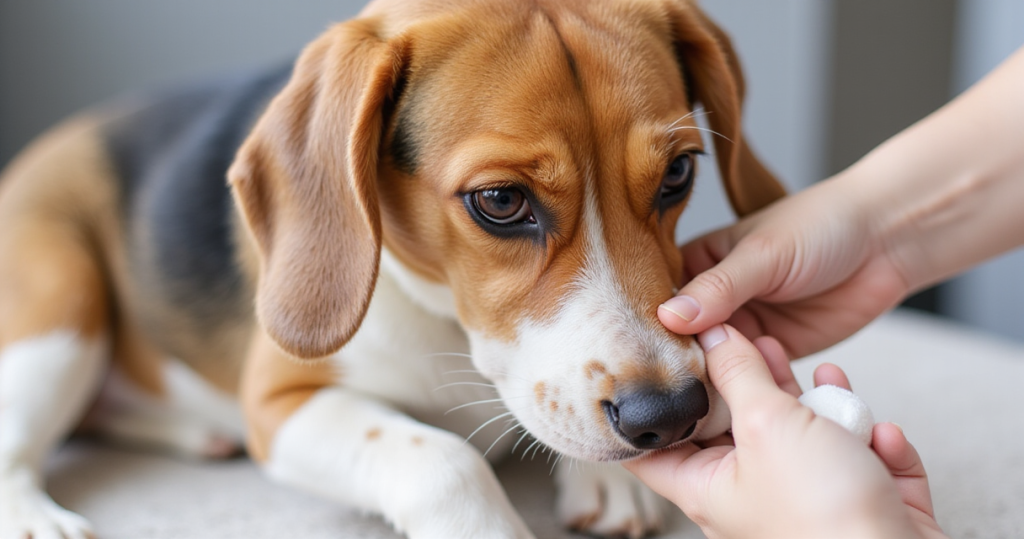
Regular ear cleaning prevents infections, thanks to those floppy ears. Use a gentle dog ear cleaning solution and cotton balls. Regular nail trimming prevents overgrowth and discomfort.
Common Health Issues
Staying Healthy and Happy: Understanding Beagle Health Concerns
Beagles are generally healthy, but they are prone to certain breed-specific health concerns:
- Cherry Eye: Prolapse of the third eyelid gland.
- Glaucoma: Increased pressure within the eye.
- Hypothyroidism: Underactive thyroid gland.
- Intervertebral Disc Disease (IVDD): Degeneration of spinal discs.
- Hip Dysplasia: Abnormal formation of the hip joint.
- Progressive Retinal Atrophy (PRA): Degeneration of the retina leading to blindness.
Preventative care tips include regular vet check-ups (annual or bi-annual), maintaining a healthy weight, providing a balanced diet and regular exercise, and genetic testing for predisposed conditions. Early detection and treatment are crucial for managing these health issues.
Health problems, symptoms, and solutions:
| Health Problem | Symptoms | Solutions |
|---|---|---|
| Cherry Eye | Red, swollen mass in the corner of the eye | Surgical correction |
| Glaucoma | Redness, cloudiness of the eye, pain, vision loss | Medication to reduce pressure, surgery in severe cases |
| Hypothyroidism | Weight gain, lethargy, hair loss, skin problems | Thyroid hormone replacement therapy |
| IVDD | Back pain, weakness, paralysis | Pain management, physical therapy, surgery in severe cases |
| Hip Dysplasia | Limping, stiffness, difficulty rising | Weight management, physical therapy, pain medication, surgery in severe cases |
| Progressive Retinal Atrophy | Night blindness, gradual vision loss | No cure, but lifestyle adjustments can help dogs adapt to vision loss |
Fun Facts
Did You Know? Surprising Facts About Beagles
- Beagles are often used as detection dogs at airports due to their exceptional sense of smell.
- Snoopy from the Peanuts comic strip is a Beagle.
- Beagles have approximately 220 million scent receptors, compared to humans’ 5 million.
- Queen Elizabeth I owned pocket Beagles, which were small enough to fit in a pocket.
- Beagles communicate using a variety of vocalizations, including barks, howls, and whines.

Is a Beagle Right for You?
Who’s the Perfect Match? Determining if a Beagle is the Right Dog for Your Lifestyle
The ideal owner profile is active individuals or families who can provide daily exercise and mental stimulation. Owners should be patient and willing to invest time in training. Individuals who appreciate a friendly and affectionate companion and people who have secure fencing or are committed to leash walking are great Beagle owners.
Address potential challenges like their strong scent drive and tendency to wander, their potential for barking and howling, and their stubbornness during training. Responsible ownership and meeting the Beagle’s specific needs are crucial.
FAQs
Common Questions About Beagles
How much exercise does a Beagle need?
At least 30-60 minutes of exercise per day, including walks, runs, and playtime.
Are Beagles good with kids?
Yes, Beagles are generally good with children due to their friendly and playful nature. However, supervision is always recommended, especially with young children.
Do Beagles shed a lot?
Beagles shed moderately year-round, with increased shedding during spring and fall.
Are Beagles easy to train?
Beagles can be challenging to train due to their independent nature and strong sense of smell. Patience, consistency, and positive reinforcement methods are essential.
Do Beagles bark a lot?
Beagles are known to bark and howl, especially when excited or left alone for extended periods.
What is the average lifespan of a Beagle?
12-15 years
Conclusion
The Beagle is a special breed: affectionate, playful, and a scent-hound extraordinaire. They bring joy and companionship to any home. Remember to provide them with the care, training, and health support they need to thrive.
Do you own a Beagle? Share your favorite Beagle stories and tips in the comments below!

At Pet Care Community, our team of passionate pet lovers, writers, and veterinary-approved experts share reliable tips, guides, and resources to help you give your furry friends the happiest and healthiest life possible. From dog breeds and training advice to nutrition, wellness, and pet parenting hacks, we’re here to support every step of your journey as a pet parent.