Not recommended — dogs and cooked lamb bones
Cooked lamb bones are NOT safe for dogs, despite raw lamb bones being excellent. Cooking destroys the bone's collagen matrix, causing them to splinter dangerously. Never give your dog bones from the Sunday roast.
🏆 Pet Care Community Safety Score™ — Cooked Lamb Bones for Dogs
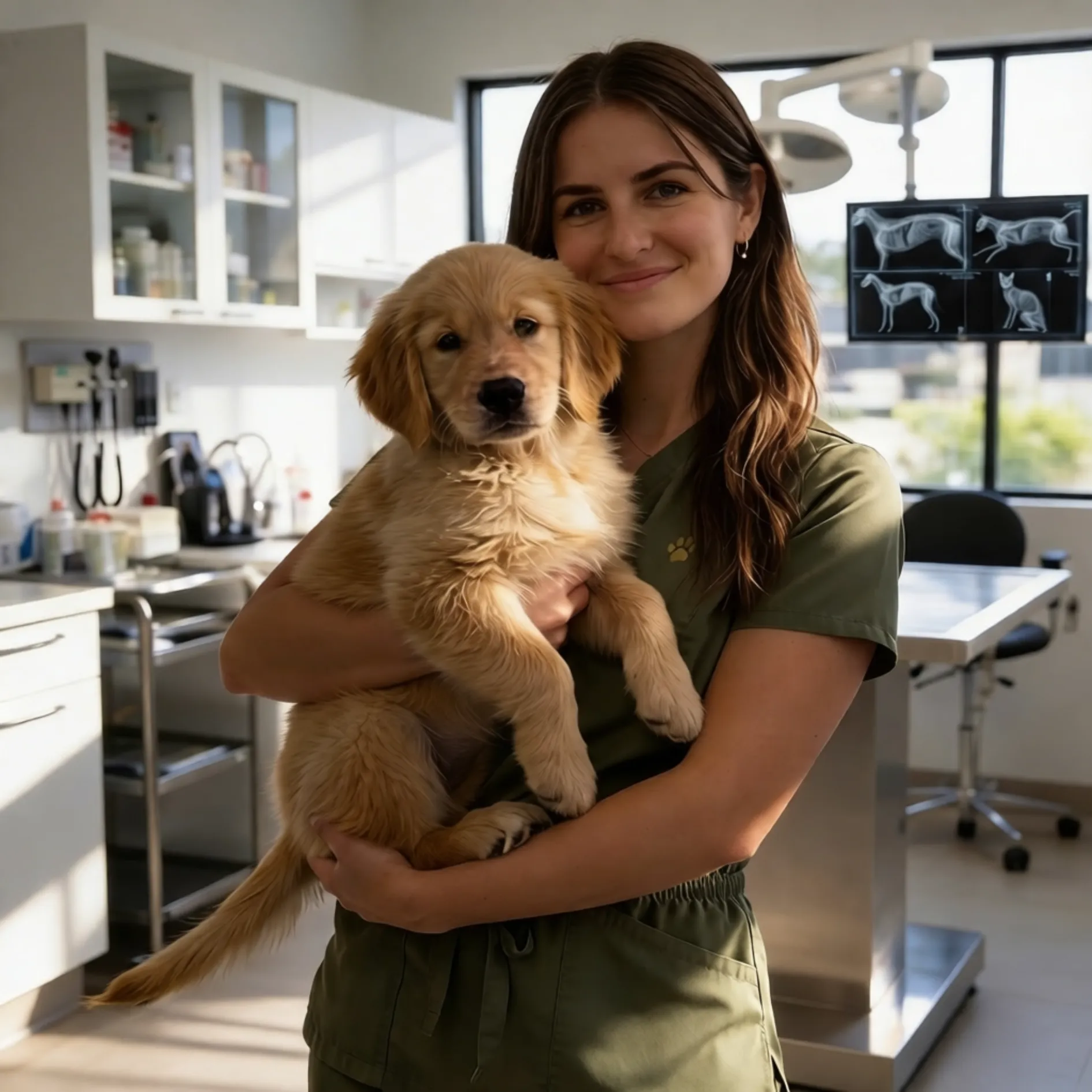
"I see the aftermath of cooked bone accidents almost monthly. Bruno gets raw lamb bones from our butcher, but I'd never give him bones from a roasted leg of lamb. The heat fundamentally changes the bone structure, making it brittle instead of flexible. I had a young spaniel come in with a perforated bowel from cooked lamb bone fragments, and the surgery was intensive. Raw bones are part of whole-prey nutrition; cooked bones are just splinter factories."
I need to be direct with you about something I see constantly in my clinic. You've just finished Sunday roast. The lamb bones are warm on the bench. Your dog sits there with those hopeful eyes, and you think, "Well, Bruno's dad gets raw bones all the time, surely the leftovers are fine too?"
They're not.
This is probably the most dangerous scenario I encounter in my Australian practice. Raw lamb bones are genuinely excellent for dogs when they're raw, full of nutrients and flexible and safe to consume. But the moment you roast that lamb bone in the oven at 180 degrees Celsius, you've fundamentally changed its chemistry. Cooking denatures the collagen matrix that holds the bone together. A raw bone is fibrous and flexible enough to crumble or splinter in relatively harmless ways. A cooked bone becomes brittle like a piece of chalk.
When that cooked lamb bone splinters, it fragments into sharp, hard shards. These aren't the chunky pieces your dog can digest or pass safely. These are knife-like fragments that can pierce the oesophagus, perforate the stomach wall, or lodge in the small intestine causing complete blockage.
I had a pointer mix come into my clinic last Tuesday after the family's Easter roast. The bone had been cooked at high temperature to get a good colour. The dog seemed happy enough that evening, but by Wednesday morning was vomiting repeatedly, wouldn't eat, and was lethargic. The X-rays showed multiple sharp fragments lodged in the small intestine. That dog needed surgery. Surgery costs thousands. Surgery leaves scar tissue. Surgery sometimes doesn't completely fix the problem.
The distinction matters because many articles online blur the line between raw and cooked bones. Yes, raw meaty bones are part of a biologically appropriate diet for dogs. They're nutrient-dense and most dogs process them safely. But cooking changes the rules completely. I'm not being cautious or overly anxious here, I'm basing this on what walks through my clinic doors.
The practical reality in Australian households is that leftover roast lamb bones are the most common exposure. That's not a metaphor, that's my experience. Someone gives the dog last night's lamb bone thinking they're being generous or thrifty. The dog gobbles it down. Then 24 to 48 hours later, the owner notices something's wrong.
What should you do instead? If Bruno's had a bone from the roast, don't panic immediately. Many dogs will digest bone fragments without complications. But watch carefully for the next 48 hours. Look for vomiting, especially if it's persistent or contains blood. Check the stools for signs of blood or if they become very dark. Watch his energy levels. Listen for signs of abdominal pain like whining or restlessness.
The problem is that you can't see internal bleeding or perforation until it's advanced. A small perforation in the intestine might show no obvious signs for hours while bacteria seep into the abdomen. By the time your dog's really sick, the situation has become critical.
If you want to give your dog bones, source raw meaty bones from a butcher who sells them for dog consumption. They'll often have lamb racks, chicken carcasses, beef knuckles. These are meant to be fed raw. Keep them frozen until you're ready to give them. Give them on a tile floor or outside so you can clean up any splinters. Always supervise.
But please, never hand over bones from last night's roast thinking you're giving your dog a treat. You're actually giving him a very real chance of needing emergency surgery or facing a life-threatening obstruction. The financial cost aside, the trauma to your dog isn't worth the convenience of offloading the bones.
🚨 My Dog Ate Cooked Lamb Bones — What Now?
If your dog has eaten cooked lamb bones and shows vomiting, constipation, lethargy, or difficulty defecating within 12 hours, contact your vet immediately or call the Animal Poisons Helpline on 1300 869 738.
Signs that warrant a vet call:
- Vomiting
- lethargy
- constipation
- dark or bloody stools
- choking
- signs of intestinal blockage (loss of appetite
- persistent vomiting)
If your dog ate a large amount or is showing the signs above: Don't wait — call immediately.
📞 Animal Poisons Helpline: 1300 869 738Available 24/7 across Australia. Have your dog's weight, breed and approximate quantity consumed ready when you call.
Frequently Asked Questions
📚 Sources & Further Reading
- Gross, M. E. (2000). 'Foreign body ingestion in dogs.' Compendium on Continuing Education for the Practicing Veterinarian, 22(2), 166-175.
- Davenport, D. J., & Bright, R. M. (1992). 'Gastrointestinal Foreign Bodies and Obstruction.' In The Cat: Diseases and Clinical Management, 1253-1272.
- AVMA (American Veterinary Medical Association) (2021). Pet food and water safety guidelines.
- Streicher, E. M. (1994). 'Perforating Foreign Bodies of the Stomach and Small Intestine.' Journal of Small Animal Practice, 35(6), 293-299.