

With their boundless energy, intelligent eyes, and perpetually wagging tails, English Springer Spaniels aren’t just pets; they’re devoted partners ready for any adventure.
This article will guide you through the fascinating history of the English Springer Spaniel, delve into the specifics of their care and training, reveal some fun facts, and help you determine if this breed is the right fit for your lifestyle. Curious if an English Springer Spaniel is right for you? Read on to find out!
2. Quick Overview
| Characteristic | Description |
|---|---|
| Breed Group: | Sporting |
| Lifespan: | 12-14 years |
| Size: | Medium (48-51 cm at the shoulder) |
| Weight: | 18-23 kg |
| Temperament: | Affectionate, energetic, intelligent, eager to please |
| Exercise Needs: | High |
| Grooming Needs: | Moderate |
| Training: | Highly trainable, responds well to positive reinforcement |
| Common Health Issues: | Hip dysplasia, eye disorders, ear infections, phosphofructokinase deficiency (PFK) |
| Best Suited For: | Active families, individuals who enjoy outdoor activities, experienced dog owners |
3. History and Origin
Where It All Began
The English Springer Spaniel breed history and origin is deeply entwined with the history of all land spaniels. For centuries, spaniels were primarily differentiated by size and function rather than distinct breeds. “Springing” was a key function – the ability to flush game birds out of dense undergrowth. Larger spaniels were used to “spring” the birds, while smaller spaniels were used for other hunting tasks.
4. Physical Characteristics
What Makes English Springer Spaniels Unique?
English Springer Spaniels are medium-sized dogs, known for their athletic build and balanced proportions. They typically stand 48-51 cm tall at the shoulder and weigh between 18 and 23 kg. Their most distinctive feature is their beautiful coat, which is moderately long, dense, and slightly wavy. Coat colours range from liver and white to black and white, often with ticking (small spots) on the white areas. Their expressive, intelligent eyes are typically dark hazel. They have a sturdy frame built for endurance and agility. Their feathered tails are traditionally docked in some countries, but undocked tails are becoming increasingly common.
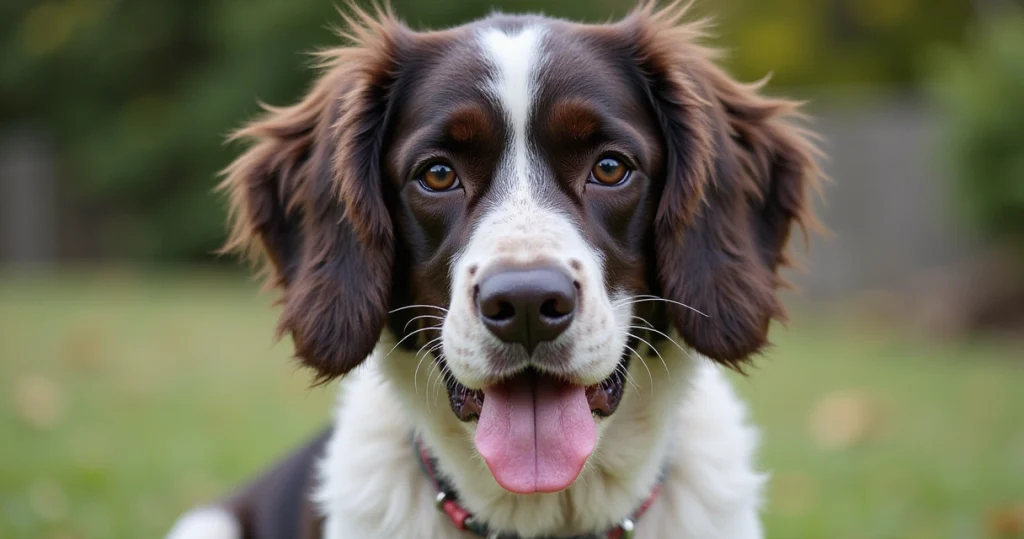
A fine example of the breed
English Springer Spaniels are slightly larger than Cocker Spaniels but smaller than Labrador Retrievers. Their energy level is high, requiring regular exercise to keep them happy and healthy. Grooming needs are moderate, requiring regular brushing to prevent matting.
5. Temperament and Personality
What’s Their True Nature?
English Springer Spaniels are known for their affectionate, cheerful, and eager-to-please personalities. They are intelligent and highly trainable, making them a joy to work with. They bond strongly with their families and thrive on human interaction. They are generally good with children and other dogs, especially when properly socialised from a young age. Their high energy levels require ample exercise and mental stimulation. They can be prone to separation anxiety if left alone for extended periods. They are eager to please and love to be involved in family activities.
Pros:
- Loyal and affectionate companions
- Highly intelligent and trainable
- Good with children and other pets
- Energetic and playful
Cons:
- High energy levels require significant exercise
- Can be prone to separation anxiety
- May exhibit destructive behaviours if bored or under-stimulated
- Prone to excessive barking if not properly trained

A family-friendly breed
6. Training and Socialisation
Raising a Well-Behaved English Springer Spaniel
Early socialisation and consistent training are crucial for raising a well-adjusted English Springer Spaniel. Expose your puppy to a variety of people, places, and situations from a young age to help them develop into confident and well-behaved adults. Springer Spaniels respond well to positive reinforcement techniques, such as treats, praise, and toys. Consistency is key to successful training.
Address common challenges with focused strategies:
- Excessive Barking: Teach a “quiet” command and address the underlying cause of the barking (e.g., boredom, anxiety).
- Leash Pulling: Use a front-clip harness or head halter and practice loose-leash walking techniques.
- Retrieving Obsession: Channel their natural retrieving instincts into structured games and training exercises.
7. Exercise and Activity Needs
Keeping Them Active and Happy
English Springer Spaniels are high-energy dogs that require a significant amount of daily exercise to stay happy and healthy. Aim for at least two hours of exercise per day, including activities such as:
- Long walks or runs
- Playing fetch or Frisbee
- Swimming
- Agility training
- Field trials

Built for action!
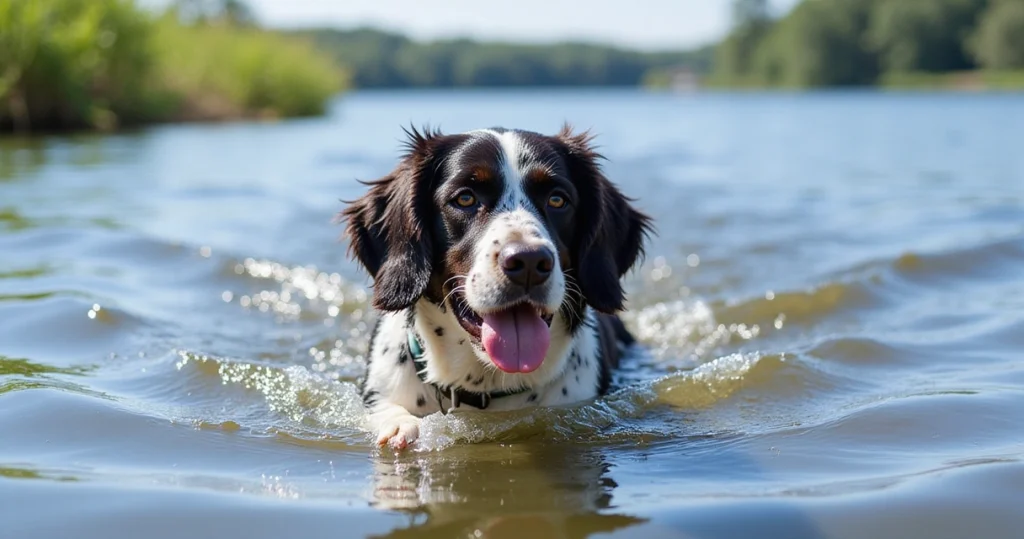
A keen swimmer
Mental stimulation is also essential to prevent boredom and destructive behaviours. Puzzle toys, training sessions, and interactive games can help keep your Springer Spaniel entertained.
8. Nutrition and Dietary Needs
Feeding Your English Springer Spaniel Right
Feed your English Springer Spaniel a high-quality dog food that is appropriate for their age, activity level, and health condition. A diet formulated for active dogs will typically have a higher protein and fat content. Always ensure fresh water is available.
Recommended feeding schedule:
- Puppies (8-12 weeks): 4 meals per day
- Puppies (3-6 months): 3 meals per day
- Puppies (6-12 months): 2 meals per day
- Adults (1+ years): 2 meals per day
9. Grooming and Coat Care
Caring for Their Signature Look
English Springer Spaniels have a moderately long, dense, and slightly wavy coat that requires regular grooming. Brush your Springer Spaniel several times a week to prevent mats and tangles. Pay special attention to the feathering on their ears, legs, and belly, as these areas are prone to matting. Regular grooming not only keeps them looking their best but also helps to identify any potential skin problems early on.
Grooming frequency and tools:
- Brushing: 2-3 times per week with a slicker brush and undercoat rake.
- Bathing: As needed, typically every 1-2 months.
- Nail trimming: Every 2-3 weeks.
- Ear cleaning: Weekly to prevent infections.
10. Common Health Issues
Staying Healthy and Happy
English Springer Spaniels are generally healthy dogs, but they are prone to certain health conditions, including:
- Hip dysplasia: A genetic condition affecting the hip joint.
- Progressive Retinal Atrophy (PRA): A degenerative eye disease that can lead to blindness.
- Ear infections: Due to their floppy ears, which can trap moisture.
- Phosphofructokinase Deficiency (PFK): A genetic disorder that affects the metabolism of red blood cells.
- Elbow Dysplasia: Similar to hip dysplasia, but affecting the elbow joint.

Understanding Hip Dysplasia
Preventative care tips:
- Regular vet check-ups: At least once a year.
- Healthy diet: Feed a high-quality diet to maintain a healthy weight.
- Regular exercise: Helps maintain joint health and overall fitness.
- Genetic testing: If you are considering breeding your Springer Spaniel, genetic testing can help identify carriers of certain diseases.
- Ear cleaning: Regularly cleaning their ears can prevent infections.
11. Fun Facts
Did You Know?
- English Springer Spaniels are known for their exceptional scenting ability, making them valuable hunting dogs.
- They are often used as detection dogs for law enforcement and search and rescue operations.
- The English Springer Spaniel is the official dog of the state of Washington.
- They have a “soft mouth,” meaning they can retrieve delicate game without damaging it.
12. Is an English Springer Spaniel Right for You?
Who’s the Perfect Match?
English Springer Spaniels are best suited for active individuals or families who can provide them with plenty of exercise, training, and attention. They thrive in homes where they are included in daily activities and have opportunities to run and play. A bored Springer Spaniel can become destructive, so a commitment to their needs is essential.
Ideal owner profile:
- Active lifestyle
- Experienced dog owner
- Patient and consistent trainer
- Commitment to providing daily exercise and mental stimulation
- Willingness to invest in grooming and healthcare
13. FAQs
Common Questions About English Springer Spaniels
- How much exercise does an English Springer Spaniel need?
At least two hours per day. - Are they good with kids?
Yes, they are generally good with children, especially when properly socialised. - Do they shed a lot?
They shed moderately, with heavier shedding during seasonal changes.
14. Conclusion
English Springer Spaniels are intelligent, energetic, and affectionate dogs that make wonderful companions for the right owners. Their versatility, trainability, and eagerness to please make them a joy to own. By understanding their history, care requirements, and potential health issues, you can provide them with a happy, healthy, and fulfilling life. They truly are one of the best breeds Australia has to offer.
Have an English Springer Spaniel? Share your story in the comments below! Or, explore related articles on other sporting breeds.

At Pet Care Community, our team of passionate pet lovers, writers, and veterinary-approved experts share reliable tips, guides, and resources to help you give your furry friends the happiest and healthiest life possible. From dog breeds and training advice to nutrition, wellness, and pet parenting hacks, we’re here to support every step of your journey as a pet parent.