

1. Introduction
Short legs, long bodies, and a whole lot of personality! Dachshunds, often called ‘wiener dogs’ or ‘sausage dogs’, aren’t just funny-looking; they’re intelligent, courageous, and incredibly loyal companions. The Dachshund is a unique breed.
Considering adding a Dachshund to your family? Keep reading to discover if this unique Dachshund breed is the perfect fit for you!
2. Quick Overview
| Feature | Description |
|---|---|
| Breed Name | Dachshund |
| Origin | Germany |
| Size | Miniature (under 5 kg), Standard (7-14 kg) |
| Lifespan | 12-16 years |
| Temperament | Intelligent, courageous, playful, stubborn, devoted |
| Coat Types | Smooth, Wirehaired, Longhaired |
| Exercise Needs | Moderate. Daily walks and playtime are essential. |
| Grooming Needs | Varies by coat type. Smooth needs minimal; Wirehaired needs stripping; Longhaired needs regular brushing. |
| Training | Requires patience and consistency due to their independent nature. |
| Common Health Issues | Intervertebral Disc Disease (IVDD), Progressive Retinal Atrophy (PRA), Obesity |
| Best Suited For | Families, singles, seniors; homes with careful handling due to their backs. Owners who are patient, consistent, and enjoy a bit of a challenge in training. |
3. History and Origin
Badgers, Boars, and Beyond: The Dachshund’s Working Roots
Dachshunds (German for “badger dog”) originated in Germany as early as the 15th century. They were specifically bred to hunt badgers, digging into their burrows and fearlessly confronting them. Their long, low bodies and strong legs were perfectly suited for this task. Later, they were also used to hunt rabbits and even wild boar! The Dachshund breed history is quite interesting.
4. Physical Characteristics
What Makes a Dachshund a Dachshund?
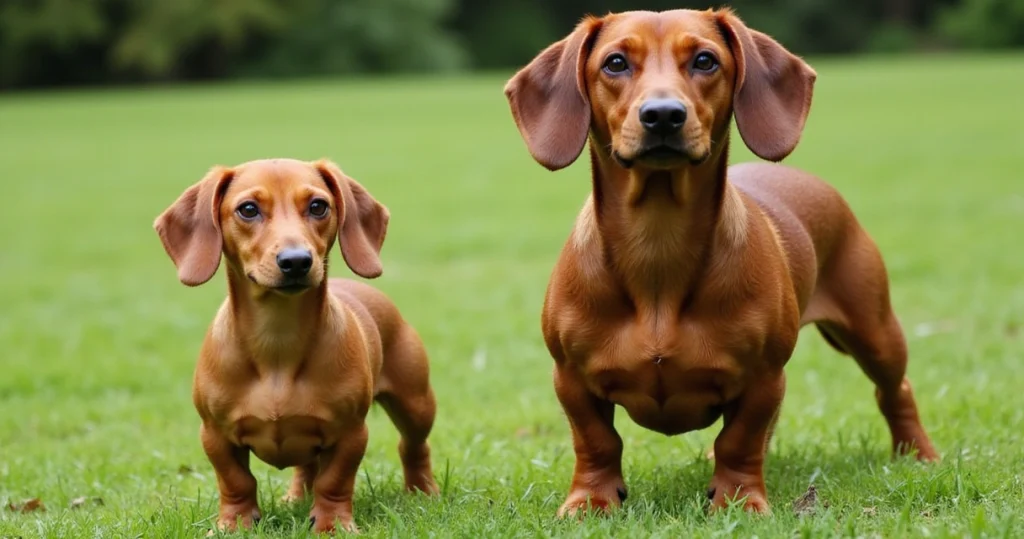
Dachshunds are instantly recognizable by their elongated bodies, short legs, and proud, intelligent expression. They come in two sizes: miniature and standard. Their coat can be smooth, wirehaired, or longhaired, and they boast a wide variety of colours and patterns, including red, black and tan, dapple (merle), and brindle. Their chest is deep, providing ample lung capacity for digging and hunting.
5. Temperament and Personality
Small Dog, Big Personality!
Dachshunds are known for their bold, intelligent, and playful personalities. They are incredibly loyal to their families but can be wary of strangers. Their hunting heritage means they can be quite independent and even stubborn, requiring a patient and consistent approach to training. They are also surprisingly brave for their size and can be quite vocal, making them good watchdogs.
Dachshund dogs make great companions.
6. Training and Socialisation
Patience is Key: Training Your Independent Dachshund
Training a Dachshund requires patience, consistency, and positive reinforcement. They are intelligent but independent, so short, engaging training sessions with plenty of rewards work best. Early socialization is crucial to prevent fearfulness or aggression towards strangers and other animals. Focus on basic commands like “sit,” “stay,” and “come,” and address common Dachshund issues like excessive barking and digging. Crate training can be beneficial for housebreaking and providing a safe space.
7. Exercise and Activity Needs
More Than Just a Lap Dog: Keeping Your Dachshund Active
Despite their small size, Dachshunds need regular exercise to stay healthy and happy. Daily walks are essential, but be mindful of their backs. Avoid strenuous activities like jumping or climbing stairs, which can put excessive strain on their spine. Playtime in the yard or indoor games like fetch and puzzle toys can also provide mental stimulation. How to care for a Dachshund dog includes proper exercise.
8. Nutrition and Dietary Needs
Feeding Your Dachshund for a Long and Healthy Life
Maintaining a healthy weight is crucial for Dachshunds, as obesity puts extra stress on their backs and increases the risk of IVDD. Feed them a high-quality dog food formulated for small breeds, and carefully monitor their portion sizes. Avoid giving them table scraps or excessive treats. Consult with your veterinarian to determine the best diet and feeding schedule for your Dachshund’s age and activity level.
9. Grooming and Coat Care
Keeping Your Dachshund Looking Sharp
Grooming requirements vary depending on the Dachshund’s coat type:
- Smooth-haired: Require minimal grooming. Occasional brushing to remove loose hair is sufficient.

- Wire-haired: Need regular brushing to prevent matting. Hand-stripping (removing dead hair) is recommended a few times a year to maintain the texture of the coat.
- Long-haired: Need daily brushing to prevent tangles and mats. Regular trimming may also be necessary.
All Dachshunds need regular nail trims and ear cleaning.
10. Common Health Issues
Protecting Your Dachshund’s Health and Well-being
Dachshunds are prone to certain health issues, including:
- Intervertebral Disc Disease (IVDD): Due to their long backs, Dachshunds are at high risk for IVDD, a condition where the discs between the vertebrae rupture or herniate, causing pain, weakness, or paralysis. Prevention is key – maintain a healthy weight, avoid jumping, and use ramps or steps to help them get on and off furniture.
- Progressive Retinal Atrophy (PRA): A degenerative eye disease that can lead to blindness. Choose breeders who screen their dogs for PRA.
- Obesity: As mentioned earlier, obesity exacerbates many health problems in Dachshunds, especially IVDD.
Common health issues in Dachshund dogs need to be understood.
11. Fun Facts
Did You Know?
- Dachshunds were originally bred in different sizes to hunt different types of prey.
- The Dachshund was the first official mascot of the Olympic Games (Munich, 1972).
- Famous people who have owned Dachshunds include Pablo Picasso, Andy Warhol, and Queen Victoria.
12. Is a Dachshund Right for You?
Finding the Perfect Match: Is a Dachshund the Dog of Your Dreams?
Dachshunds are best suited for owners who:
- Are patient and consistent with training
- Can provide regular exercise without stressing their backs
- Are willing to manage their barking and digging tendencies
- Understand the importance of preventative healthcare
- Want a loyal and affectionate companion
They can thrive in apartments or houses with yards, as long as their exercise needs are met. They can be good family dogs, but early socialization is important, especially with young children.
13. FAQs
Common Questions About Dachshunds
How much exercise does a Dachshund need?
A Dachshund needs at least 30 minutes of exercise a day. This can include walks, play time, and mental stimulation.
Are Dachshunds good with kids?
Dachshunds can be good with kids if they are properly socialized from a young age. It’s important to teach children how to handle them gently, due to their delicate backs.
Do Dachshunds shed a lot?
Dachshunds do shed, but the amount of shedding varies depending on their coat type. Smooth-haired Dachshunds shed the least, while long-haired Dachshunds shed the most. Wire-haired Dachshunds shed less if their coats are stripped regularly.
14. Conclusion

Dachshunds are unique and charming dogs with a rich history and distinctive personality. While they require specific care and training due to their physical characteristics and independent nature, they can make wonderful companions for the right owners. Providing proper Dachshund dog care is essential.
Do you have a Dachshund story to share? Leave a comment below! And be sure to check out our other articles on small breed dogs!

At Pet Care Community, our team of passionate pet lovers, writers, and veterinary-approved experts share reliable tips, guides, and resources to help you give your furry friends the happiest and healthiest life possible. From dog breeds and training advice to nutrition, wellness, and pet parenting hacks, we’re here to support every step of your journey as a pet parent.