

1. Introduction
With their bright white coats and cheerful personalities, West Highland White Terriers, affectionately known as “Westies,” are charming companions. But is this small dog the right fit for your life? This article will explore the Westie’s fascinating history, essential care tips, effective training methods, potential health concerns, and whether their unique traits align with your lifestyle. Ready to learn if a West Highland White Terrier is the perfect addition to your family? Keep reading!
2. Quick Overview
The West Highland White Terrier, a small yet sturdy breed, hails from the rugged landscapes of Scotland. Known for their distinctive white double coat and confident demeanour, Westies have captured the hearts of dog lovers worldwide. Before bringing one home, it’s essential to understand their unique characteristics.
| Characteristic | Description |
|---|---|
| Breed Name: | West Highland White Terrier |
| Origin: | Scotland |
| Size: | Small (typically 25–28 cm tall, 6–9 kg) |
| Coat: | Double coat – a harsh, wiry outer coat and a soft, dense undercoat |
| Temperament: | Confident, playful, intelligent, independent, can be stubborn |
| Life Expectancy: | 12–16 years |
| Grooming Needs: | Moderate – regular brushing, occasional hand-stripping to maintain coat texture |
| Exercise Needs: | Moderate – daily walks and playtime |
| Training Difficulty: | Moderate – requires patience and consistency due to their independent nature |
| Common Health Issues: | Skin allergies, Legg-Calve-Perthes Disease, Craniomandibular Osteopathy (Lion Jaw), Patellar Luxation |
| Best Suited For: | Active families or individuals who can provide consistent training, mental stimulation, and regular grooming. Not always ideal for very young children due to their terrier nature; early socialization is important. Good for apartment living with sufficient exercise. |
3. History and Origin
The West Highland White Terrier breed history and origin are traced back to Scotland in the 19th century. They were originally bred to hunt vermin, like rats and foxes, on farms and estates. They are related to other Scottish terriers like the Cairn Terrier, Scottish Terrier, and Dandie Dinmont Terrier. The white coat was specifically bred for so that the dogs would be easily distinguished from the quarry they were hunting, reducing the risk of accidental shooting.
Colonel Edward Donald Malcolm of Poltalloch is credited with solidifying the breed after a reddish-brown terrier of his was accidentally shot. He vowed to only breed white dogs, leading to the Westie we know today. The breed gained popularity in the early 20th century, becoming a fashionable companion dog.
4. Physical Characteristics
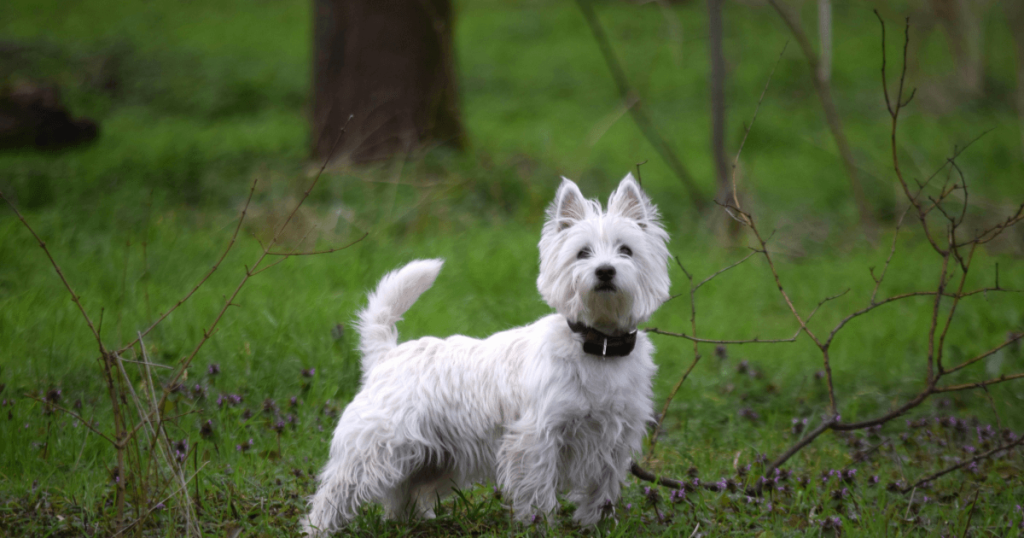
Westies are small, sturdy dogs with a distinctive bright white, double coat. The outer coat is harsh and wiry, while the undercoat is soft and dense. They have a characteristic “carrot-shaped” tail that is carried erect. Their dark, almond-shaped eyes and black nose create a striking contrast with their white fur.

5. Temperament and Personality
Westies are known for their confident, playful, and affectionate personalities. They are intelligent dogs but can also be independent and stubborn, which can make training a challenge. They are generally good with children but early socialization is important, especially with very young kids, due to their terrier nature (high prey drive). They can be prone to barking, particularly if bored or left alone for long periods.
Pros:
- Affectionate and playful
- Relatively small and adaptable to different living situations.
- Intelligent and eager to please (though sometimes stubborn).
Cons:
- Can be stubborn and difficult to train
- Prone to barking
- May chase small animals due to their hunting instincts.
6. Training and Socialisation
Early socialization is crucial to ensure Westies are well-adjusted and comfortable around other dogs and people. Expose them to different sights, sounds, and experiences from a young age. Consistent and patient training is essential. Westies respond well to positive reinforcement methods, such as treats and praise. Address common challenges like barking and digging with consistent training and management. Recall training is very important, as their prey drive can lead them to chase after small animals.
7. Exercise and Activity Needs
Westies have moderate energy levels. They need daily exercise to stay physically and mentally stimulated. A good walk or two each day, combined with playtime in the backyard, is usually sufficient. They also benefit from mental stimulation, such as puzzle toys or training sessions.
Suggested Activities:
- Daily walks
- Playtime in the park
- Agility training (for more active Westies)
- Interactive games
A sample weekly exercise schedule could look like this:
- Monday: Morning Walk (30 minutes), Playtime with toys (20 minutes)
- Tuesday: Training Session (15 minutes), Evening Walk (30 minutes)
- Wednesday: Visit to the dog park (45 minutes)
- Thursday: Morning Walk (30 minutes), Puzzle Toy (30 minutes)
- Friday: Playtime in the backyard (30 minutes)
- Saturday: Longer hike/walk (60 minutes)
- Sunday: Relaxed walk, family time (30 – 45 minutes)

8. Nutrition and Dietary Needs
Feed your Westie a high-quality dog food formulated for small breeds. Pay attention to portion sizes to prevent obesity. Westies can be prone to weight gain if overfed. Avoid giving them table scraps or human food, as some foods can be toxic to dogs. Consider a diet rich in omega-3 fatty acids to support skin health, given their predisposition to skin allergies.
9. Grooming and Coat Care
Westies require regular grooming to maintain their white coat and prevent matting. Brush them several times a week to remove loose hair and dirt. They benefit from occasional hand-stripping, a grooming technique that removes dead hair and maintains the coat’s texture. This is best done by a professional groomer. Bathe them only when necessary, as frequent bathing can dry out their skin. Pay attention to their ears and trim the hair around them to prevent ear infections.
10. Common Health Issues
Westies are generally healthy dogs, but they are prone to certain health problems:
- Skin Allergies: Westies are prone to allergies, which can cause itching, redness, and skin infections.
- Legg-Calve-Perthes Disease: A condition affecting the hip joint, causing pain and lameness.
- Craniomandibular Osteopathy (CMO) (Lion Jaw): A bone disease affecting the jaw, typically seen in young dogs.
- Patellar Luxation: A dislocated kneecap.
Regular vet check-ups are essential for early detection and treatment of health problems. A healthy diet and exercise can help prevent some health issues.
Here’s a breakdown of common health issues:
- Skin Allergies: Itching, redness, skin infections. Prevention/Management: Hypoallergenic diet, regular grooming, allergy testing, medication (as prescribed by a vet)
- Legg-Calve-Perthes Disease: Pain, lameness. Prevention/Management: Surgery, pain management
- CMO (Lion Jaw): Swelling of the jaw, pain. Prevention/Management: Pain management, supportive care
- Patellar Luxation: Limping, skipping. Prevention/Management: Surgery (in severe cases), weight management, joint supplements

11. Fun Facts
Westies were once known as the Poltalloch Terrier, after the estate where they were developed. Their bright white coat was bred to make them easily visible during hunts. Westies have appeared in numerous advertisements and films, making them one of the most recognizable dog breeds.
12. Is a Westie Right for You?
Westies are best suited for active families or individuals who can provide consistent training, mental stimulation, and regular grooming. They do well in apartments with sufficient exercise and mental enrichment. Early socialization is important if they will be around young children or other pets. They need an owner who is patient and willing to address their independent nature during training.
13. FAQs
How much exercise does a Westie need?
About 30-60 minutes of exercise per day, including walks and playtime.
Are Westies good with kids?
Generally, yes, but early socialization is crucial.
Do Westies shed a lot?
They shed moderately. Regular brushing can help minimize shedding.
Are Westies easy to train?
They can be stubborn, so patience and consistency are important. Positive reinforcement methods work best.
14. Conclusion
West Highland White Terriers are charming and intelligent dogs with a rich history. They make wonderful companions for the right owners. Remember that understanding their unique needs in grooming, exercise, and training is essential for a happy and healthy relationship. Do you own a Westie? Share your experiences and tips in the comments below! And if you are looking for a new companion, consider adopting.
This article was reviewed by a certified dog behaviourist in Australia. Information sourced from the Australian National Kennel Council (ANKC), RSPCA Australia, and veterinary guidelines.

At Pet Care Community, our team of passionate pet lovers, writers, and veterinary-approved experts share reliable tips, guides, and resources to help you give your furry friends the happiest and healthiest life possible. From dog breeds and training advice to nutrition, wellness, and pet parenting hacks, we’re here to support every step of your journey as a pet parent.