

Your dog’s wagging tail and eager eyes at dinner time warm your heart. But if those extra treats have turned your fit friend into a cuddly companion, you’re not alone. Research shows that over 40% of Australian dogs are either overweight or obese (University of Sydney, 2023) making it the most common form of malnutrition our pets face. Excess weight puts immense pressure on joints, organs, and the immune system. It can even shorten your dog’s lifespan by up to two years (RSPCA Australia, 2024). The good news? With the right approach, you can help your dog return to a healthy weight and add years to their life.
The good news is that weight is manageable. By understanding the causes of dog obesity, you can take control of your pet’s health. This guide provides a clear path to prevent dog obesity and explores how to treat dog obesity safely and effectively.
Quick Answers
- What is dog obesity? Dog obesity occurs when excess body fat accumulates to the point where it harms your dog’s health and quality of life.
- How common? Over 40% of Australian dogs are overweight or obese, with 33.5% overweight and 7.6% obese.
- Why it matters: Obesity shortens lifespan, increases disease risk, and reduces your dog’s ability to play and enjoy life.
- Can it be reversed? Yes. Most dogs see energy levels improve within weeks of starting a plan.
- What is the goal? A gradual loss of 1% to 2% of body weight per week through controlled diet and exercise..
- First steps: Book a vet check to assess your dog’s body condition score and rule out medical causes.
- Prevention key: Measure food portions, limit treats to 10% of daily calories, and provide regular exercise.
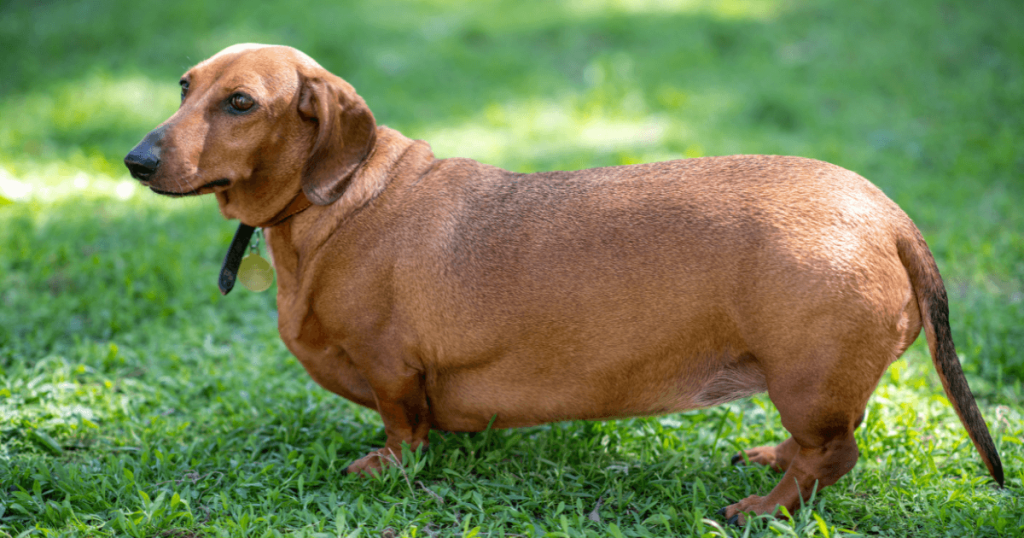
What is dog obesity?
Dog obesity is a chronic disease defined by an accumulation of excess body fat. It occurs when a dog consistently consumes more energy than they use. In Australia, it is now considered the most common preventable health issue in companion animals (Better Health Channel, 2023). It is not “puppy fat” or a sign of a “well-fed” dog; it is a medical state that causes internal inflammation.
How to tell if your dog is overweight?
You do not need a scale to spot the early signs. Most vets use a 9-point Body Condition Score (BCS) system.
The At-Home Check:
- The Rib Test: Run your hands over your dog’s chest. You should be able to feel the ribs easily with a light touch, similar to the back of your hand. If you have to press hard, they are overweight.
- The Waist Check: Look down at your dog from above. They should have a clear “waist” indentation behind the ribs.
- The Tummy Tuck: View your dog from the side. Their abdomen should slope upward from the end of the ribcage toward the hind legs.
If your dog lacks a waist or has a swinging “pouch” of fat, it is time for action. If you notice they are also slowing down or struggling to get up, use a pet symptom checker to see if these signs relate to weight or an underlying health condition.
Body Condition Score
Vets use a Body Condition Score (BCS) system to assess weight more precisely. The most common scale runs from 1 (severely underweight) to 9 (severely obese), with 4–5 being ideal.
When you visit your vet, ask them to:
- Assess your dog’s current BCS
- Calculate your dog’s ideal weight
- Rule out underlying health conditions
- Create a personalised weight loss plan
Understanding your dog’s body condition score helps you track progress objectively and adjust your approach as needed.
Causes of Dog Obesity
Multiple factors contribute to weight gain in dogs. Identifying which apply to your situation helps you address the root cause.
Overfeeding and Portion Errors
The leading cause is simply too much food. Many owners feed more than recommended guidelines, don’t measure portions, or underestimate how quickly calories add up.
Free-feeding (leaving food out all day) removes portion control entirely, making it easy for dogs to overeat.
Treats and Table Scraps
Treats are a major hidden source of calories. Treats should not occupy more than 10% of daily calories. A few biscuits, some cheese, a bit of sausage, these extras can double your dog’s intended calorie intake.
Table scraps add concentrated fats and sugars that weren’t factored into their daily needs.
Lack of Exercise
Modern lifestyles mean many dogs don’t get enough physical activity. With high-density living, we’re seeing an increase in animals housed indoors, resulting in reduced opportunities for dogs to get incidental exercise.
Even energetic breeds become overweight when daily movement is insufficient.
Desexing and Hormones
Neutering is considered a risk factor for obesity due to the decrease in metabolic rate and alteration in feeding behaviour. Desexed dogs may need 25–30% fewer calories than intact dogs.
Age-Related Changes
Older dogs naturally become less active and experience slower metabolism. Without adjusting food portions, weight gain follows.
Medical Causes
Some health conditions cause weight gain:
- Hypothyroidism (low thyroid function)
- Cushing’s disease (excess cortisol)
- Certain medications (steroids, anti-seizure drugs)
Your vet should check for these before starting any weight loss program.
Breed Predisposition
Some breeds are more prone to obesity, including Labradors, Cavalier King Charles Spaniels, Cocker Spaniels, Beagles, and Dachshunds.
Owner Factors
Some studies found female dogs were at greater risk of overweight or obesity. Animals at greater risk include neutered, older, poorly exercised animals, animals with obese owners, and single pet households.

Health Risks Linked With Obesity
Carrying extra weight puts your dog at serious risk for multiple health conditions.
Joint Problems and Arthritis
Excess weight can contribute to musculoskeletal diseases, like ruptured ligaments and the onset of osteoarthritis (Greencross Vets, 2025). Every extra kilogram adds significant stress to joints not designed to carry that load.
Fat tissue also produces inflammatory chemicals that damage joints even when not bearing weight, accelerating arthritis development.
Diabetes and Insulin Resistance
As with humans, obesity increases insulin resistance in cats and dogs. When the body is unable to perform this function, diabetes develops, posing serious risks to your pet’s health.
Dogs with obesity show increased insulin production, and when the body’s needs exceed supply, diabetes results. This requires lifelong management with diet changes and potentially insulin injections.
Heart Disease and High Blood Pressure
Multiple studies have revealed a direct link between obesity and high blood pressure (Greencross Vets, 2025). High blood pressure leads to conditions of the eyes and puts pressure on the heart and kidneys.
Excess weight forces the heart to work harder, pumping blood to additional tissue. Over time, this chronic strain can lead to heart failure.
Reduced Lifespan and Quality of Life
A study by the Waltham Centre for Pet Nutrition discovered that overweight dogs can expect to live ten months shorter than their ideal-weight counterparts.
Beyond the numbers, obese dogs experience:
- Reduced energy and playfulness
- Difficulty breathing, especially in hot weather
- Increased surgical and anaesthetic risks
- Skin problems from inability to groom properly
- Heat intolerance
- Higher cancer risk
Other Serious Conditions
Obesity also increases risk of:
- Liver disease
- Pancreatitis
- Respiratory problems
- Bladder stones
- Weakened immune function
The inflammation caused by excess fat affects virtually every body system, creating a cascade of health problems.

How to Treat Dog Obesity Safely
Safe, effective weight loss requires a structured approach. Crash diets harm your dog, slow and steady wins this race.
Step 1: Vet Check and Baseline Measurements
Before changing anything, book a veterinary appointment.
Your vet will:
- Weigh your dog accurately
- Assess body condition score
- Check for underlying medical conditions through physical exam (and blood tests if needed)
- Calculate your dog’s ideal target weight
- Determine safe daily calorie needs
Ask your vet to record the current weight and BCS. You’ll track against these baselines.
If medical conditions like hypothyroidism are found, treating those first is essential for successful weight loss.
Step 2: Feeding Plan
Portion Control
The foundation of weight loss is controlled portions. Don’t just “feed less” of current food, this can cause nutritional deficiencies.
Work with your vet to:
- Calculate exact daily calorie needs for weight loss
- Determine how much food to feed at each meal
- Set a feeding schedule (usually 2 meals daily)
Use measuring cups or a kitchen scale. Eyeballing portions leads to overfeeding.
Meal Timing
Scheduled meals (rather than free-feeding) help control intake and establish routine. Most dogs do well with breakfast and dinner.
Split the daily allowance into two equal portions.
Treat Budget
Treats should not occupy more than 10% of the daily calories(VCA Animal Hospitals). Calculate what 10% means for your dog, then stick to it.
Choose low-calorie options:
- Carrot sticks
- Green beans (plain, cooked or raw)
- Small pieces of apple (no seeds)
- Cucumber slices
- Plain air-popped popcorn (no salt or butter)
Avoid high-fat treats like cheese, processed dog biscuits in large quantities, and definitely no chocolate or toxic foods.
Step 3: Best Diet for Overweight Dogs
Diet Principles
An effective weight loss diet should be:
- Lower in calories but nutritionally complete
- Higher in fibre to help your dog feel full
- Adequate in protein to preserve lean muscle mass
- Lower in fat to reduce calorie density
Many prescription veterinary weight loss foods are specifically formulated to meet these criteria. These diets provide all essential nutrients while restricting calories, so your dog doesn’t become malnourished.
Alternatively, your vet may recommend reducing portions of a high-quality maintenance food, but this approach requires careful monitoring to avoid nutrient deficiencies.
What to Avoid
- Generic “light” foods that may lack proper nutrient balance
- Simply cutting current food in half without veterinary guidance
- Home-cooked diets without professional formulation (risk of imbalances)
- Adding oils or supplements not recommended by your vet
Never put your dog on an extreme low-calorie diet without veterinary supervision.
Step 4: Exercise Plan
Exercise supports weight loss but cannot compensate for overfeeding. By far, the most common contributing factors are overfeeding combined with too little exercise (PFIAA, 2020).
Safe Progressions
If your dog isn’t currently active, start slow:
- Week 1–2: 10-minute gentle walks daily
- Week 3–4: Increase to 15–20 minutes
- Week 5+: Build toward 30 minutes daily
Split exercise into multiple shorter sessions if needed. Two 15-minute walks are better than one 30-minute session for deconditioned dogs.
Best Activities
- Walking: The foundation. Aim for a purposeful pace, not just sniffing strolls.
- Swimming: Excellent low-impact option for dogs with joint pain
- Play sessions: Fetch, tug, interactive games
- Mental stimulation: Puzzle feeders, sniff games, training sessions (burns calories and prevents boredom eating)
Joint Pain Modifications
Many overweight dogs have arthritis. Modify exercise accordingly:
- Stick to soft surfaces (grass, not concrete)
- Keep walks short but frequent
- Use hydrotherapy or swimming if available
- Discuss pain management with your vet, some dogs need anti-inflammatory medication during weight loss
Never push a dog with severe arthritis into painful exercise. Your vet may recommend rehabilitation therapy.
Step 5: Tracking Progress
Weekly weigh-ins: Weigh your dog at the same time each week. A general guideline for weight loss is between 0.5% and 2% of the pet’s body weight per week. For example, a 30kg dog should lose 150–600g weekly.
Monthly BCS checks: Have your vet reassess body condition score monthly. This ensures you’re losing fat, not muscle.
Take photos: Side and overhead photos monthly help you see changes that daily viewing might miss.
Adjust as needed: If weight loss is too slow, reduce calories by 5–10%. If it’s too fast (over 2% weekly), increase slightly. If progress stalls, your vet will recalculate needs based on new weight.
What Not to Do
Never crash diet: Rapid weight loss causes muscle loss, nutritional deficiencies, and rebound weight gain.
Don’t suddenly spike exercise: Overweight dogs can’t handle intense activity from day one. Build gradually to avoid injury.
Don’t give up after setbacks: Weight loss isn’t linear. Plateaus are normal, adjust and keep going.
Don’t feed family members separately: Everyone in the household must follow the same feeding rules. One person sneaking treats undermines the entire plan.
Weight Loss Tips for Dogs That Owners Stick To
The best plan is one you’ll actually follow. Here are practical systems that work long-term.
Make It Automatic
- Use automatic feeders for precise portions
- Set phone reminders for walks
- Pre-measure daily food each morning into containers
Environmental Management
- Remove food bowls between meals (no free-feeding)
- Keep human food out of reach
- Don’t eat in front of your dog if they beg
- Use baby gates to keep dogs out of the kitchen during meal prep
Behaviour Strategies
Recognise that food isn’t the only way to show love. When your dog seeks attention:
- Give pats and praise instead of treats
- Play a quick game
- Offer a brief training session
- Go for a short walk
Veterinarians should ensure owners engage appropriately with animals so that not every cry for attention is answered by giving food.
Slow Feeding Techniques
- Use puzzle feeders or slow-feed bowls
- Scatter kibble in the yard for “hunting”
- Freeze food in Kong toys
- Hide small portions around the house for search games
These make meals last longer and provide mental stimulation.
Family Commitment
Everyone in the household must agree to:
- No table scraps
- No sneaking treats
- Follow the exact feeding portions
- Stick to the exercise schedule
If you’re not ready to check whether your dog might have health issues affecting their weight, try using a symptom checker to understand what signs to watch for.
Prevent Dog Obesity Long Term
Once your dog reaches their target weight, the work continues. Prevention is about permanent lifestyle change.
Maintenance Feeding
Your vet will calculate new calorie needs for weight maintenance (higher than weight loss, but lower than what caused the gain initially).
Continue measuring portions. It’s easy to slip back into overfeeding.
The 10% Treat Rule
Treats should not occupy more than 10% of the daily calories. This applies for life, not just during weight loss.
Keep healthy treat options available and ditch the high-calorie options permanently.
Regular Monitoring
- Weigh monthly (or weekly if you prefer)
- Check body condition score every 2–3 months
- Have your vet assess annually during regular check-ups
Catching small gains early prevents them becoming big problems.
Adjust for Life Changes
Reduce food when:
- Your dog is desexed
- Activity levels decrease (injury, bad weather, ageing)
- Changing from puppy to adult food
Increase food if your dog becomes more active (new exercise routine, dog sports).
Keep Exercise Consistent
Maintain daily walks and play. Exercise provides mental stimulation, joint health, and calorie burning. It’s a non-negotiable part of a healthy lifestyle.
If you’re welcoming a new dog into your family and want to start them off on the right paw with healthy habits, you might enjoy finding the perfect name with a pet name generator as you begin your journey together.
Common Mistakes to Avoid
Mistake 1: Guessing portions. Always measure. What you think is one cup might be two.
Mistake 2: “They’re so hungry!” Overweight dogs may beg more because they’re used to overeating. Don’t confuse begging with actual hunger.
Mistake 3: Treating medical issues as behavioural. If your dog is gaining despite controlled feeding, see your vet. Thyroid problems won’t resolve with diet alone.
Mistake 4: Inconsistency on weekends. The plan works seven days a week, not just Monday to Friday.
Mistake 5: Using food as primary bonding. Find other ways to connect with your dog through play, training, and quality time.
Mistake 6: Comparing to other dogs. Every dog’s calorie needs differ based on age, breed, activity, and metabolism.
Mistake 7: Giving up too soon. Safe weight loss takes months. A 10kg dog losing 1% weekly still needs 20+ weeks to lose 2kg.

4-Week Starter Plan
This table gives you a basic framework. Customise portions and exercise to your dog’s specific needs as determined by your vet.
| Week | Feeding | Exercise | Monitoring |
| 1 | Switch to measured portions (vet-calculated calories). Remove all free-feeding. Treats = 10% of daily calories only. | 10-minute gentle walk daily. | Baseline weigh-in Day 1. Weekly weigh-in Day 7. |
| 2 | Continue measured meals. No changes unless weight loss >2% (then increase portions slightly). | 15-minute walks daily. Add 5 minutes of play. | Weekly weigh-in. Check for any lameness or fatigue. |
| 3 | Maintain same portions if losing 0.5–2% weekly. Adjust if needed. | 20-minute walks daily. Try new activity (swimming, fetch). | Weekly weigh-in. Take progress photos. |
| 4 | Review with vet. Adjust calories if weight loss has stalled or is too rapid. | Work toward 30 minutes daily activity. | Vet appointment: weigh, assess BCS, adjust plan for next month. |
Continue this pattern monthly, adjusting portions and exercise as your dog progresses. Most dogs need 4–12 months to reach their goal weight safely.
FAQs
Q: How do I know if my dog is overweight or just big-boned?
A: “Big-boned” isn’t really a thing in dogs. Use the rib test and waist check described earlier. If you can’t feel ribs easily or see a waist, excess fat is present. Your vet can confirm with a body condition score assessment.
Q: Can I put my dog on a diet without seeing a vet?
A: Not recommended. Underlying medical issues could be causing weight gain, and calculating safe calorie needs requires professional input. An incorrect approach may harm your dog rather than help.
Q: How fast should my dog lose weight?
A: A safe rate of weight loss for dogs is 1 to 2 percent of their current body weight per week. Faster loss risks muscle loss and nutritional deficiencies.
Q: My dog acts starving on their new diet. What do I do?
A: This is normal initially. Try slow-feed bowls, puzzle feeders, adding low-calorie vegetables to meals (with vet approval), and splitting daily food into 3–4 smaller meals. The adjustment period usually lasts 1–2 weeks. If extreme hunger persists, consult your vet, portions may need adjustment.
Q: Will exercise alone help my dog lose weight?
A: Unlikely. The major factor leading to obesity is that the pet is eating more energy than it needs, combined with little exercise. You must address both diet and activity, with diet being the primary factor.
Q: Are “light” or “diet” dog foods effective?
A: Some are, but quality varies. Many commercial “light” foods aren’t formulated for weight loss – they’re just slightly lower calorie. Prescription veterinary weight loss diets are specifically designed with proper nutrient balance for safe weight reduction. Discuss options with your vet.
Q: Can certain breeds not lose weight easily?
A: Some breeds are more prone to obesity (Labradors, Beagles, Cocker Spaniels), and some have slower metabolisms, but all dogs can lose weight with the right approach. It may take longer for certain breeds, and calorie needs may be lower than expected, but it’s possible.
Q: My dog has arthritis. Can they still exercise for weight loss?
A: Yes, but modify activities. Low-impact exercise like swimming, short frequent walks on soft surfaces, and controlled physical rehabilitation are ideal. Your vet may prescribe pain medication to make movement more comfortable during the weight loss process. Weight loss itself will significantly improve arthritis symptoms.
Q: How long will it take my dog to reach a healthy weight?
A: This depends on how much weight they need to lose. At a safe rate of 1–2% weekly, a dog that’s 20% overweight needs approximately 10–20 weeks (2.5–5 months). Severely obese dogs may need 6–12 months or more. Patience is essential.
Q: What if my dog’s weight loss plateaus?
A: Plateaus are normal. As your dog loses weight, their calorie needs decrease. Your vet will recalculate requirements and adjust portions. Sometimes adding slightly more exercise or changing the type of food helps. Never drastically cut calories without veterinary guidance.

A passionate dog lover, Raj Shakya has years of experience helping Aussie pet owners manage and overcome common dog training challenges. With a focus on positive reinforcement and practical solutions, Raj is dedicated to making life easier for both dogs and their families by encouraging better behaviour, stronger communication, and happier bonds.