

Introduction
With their tuxedo-like markings and charming personality, Boston Terriers are often called the “American Gentleman” of the dog world. But there’s much more to this breed than meets the eye. This article dives into the Boston Terrier’s breed history and origin, care requirements, training tips, common health issues, and whether they are the right fit for your lifestyle. Intrigued by this charismatic breed? Keep reading to discover if a Boston Terrier is the perfect companion for you!
Quick Overview
| Characteristic | Description |
|---|---|
| Breed Group | Non-Sporting |
| Origin | United States |
| Size | Small (12-17 inches, 12-25 pounds) |
| Lifespan | 11-13 years |
| Temperament | Intelligent, Affectionate, Lively, Playful, Gentle |
| Coat | Short, Smooth |
| Color | Black, Brindle, or Seal with White Markings |
| Exercise Needs | Moderate |
| Grooming Needs | Low |
| Training Difficulty | Moderate |
| Common Health Concerns | Brachycephalic Syndrome, Cataracts, Patellar Luxation, Deafness |
| Best Suited For | Families, Apartment Living, Active Individuals, Those Seeking a Playful and Affectionate Companion |
Where It All Began: The Boston Terrier’s Journey
The Boston Terrier’s breed history and origin began in the late 19th century in Boston, Massachusetts. A Bulldog and a White English Terrier were crossed, creating the foundation of the breed. Initially bred for dogfighting, the breed quickly transitioned into a beloved companion dog due to its gentle nature and distinctive appearance. They gained AKC recognition in 1893 and quickly became a popular breed in America, earning the nickname “American Gentleman” due to their well-mannered demeanor and tuxedo-like markings.
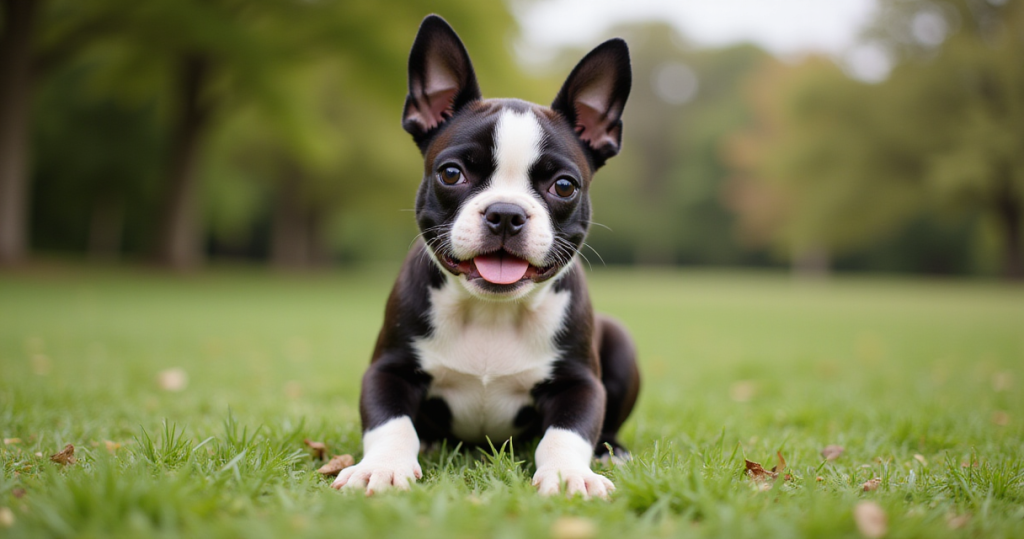
The Distinguished Look: Defining Features of the Boston Terrier
Boston Terriers are small, compact dogs with a square-shaped head and a short muzzle. Their most distinctive feature is their “tuxedo” coat, which is typically black, brindle, or seal with white markings on the chest, muzzle, and blaze. They have large, round eyes that are set wide apart, giving them an intelligent and expressive appearance. Their ears are typically erect and either naturally that way or cropped to stand erect.
Here’s how they compare physically to similar breeds:
| Feature | Boston Terrier | French Bulldog | Pug |
|---|---|---|---|
| Weight | 12-25 lbs | 16-28 lbs | 14-18 lbs |
| Height | 12-17 inches | 11-13 inches | 10-14 inches |
| Muzzle Length | Short | Very Short | Very Short |
| Common Colors | Black/Brindle/Seal & White | Brindle, Fawn, White | Fawn, Black |
| Temperament | Lively, Affectionate | Playful, Affectionate | Charming, Mischievous |

A Gentleman and a Joker: Understanding the Boston Terrier’s Personality
Boston Terriers are known for their intelligent, playful, and affectionate personalities. They are generally gentle and good-natured, making them excellent family pets. They are eager to please, which makes them relatively easy to train, although they can have a stubborn streak.
Pros: Affectionate, intelligent, good with children, adaptable to apartment living.
Cons: Can be stubborn, prone to separation anxiety, sensitive to heat and cold.
Shaping a Well-Mannered Companion: Training Your Boston Terrier
Early socialization is crucial for Boston Terriers to ensure they are well-adjusted and confident. Introduce them to various people, places, and situations from a young age. Positive reinforcement training methods work best with this breed. Consistency is key, as they can be stubborn at times.
Training Tips: Focus on basic obedience commands (sit, stay, come), leash training, and crate training. Address potential behavior issues like barking or chewing early on.

Staying Active and Engaged: Exercise Requirements for Boston Terriers
Boston Terriers have moderate energy levels and require regular exercise to stay healthy and happy. Daily walks, playtime in the backyard, and interactive games are all great ways to keep them physically and mentally stimulated.
Suggested Activities: Short walks, fetch, puzzle toys, agility training (modified for their size).
Here is a Weekly exercise planner
| Day | Activity | Duration |
|---|---|---|
| Monday | Walk | 30 minutes |
| Tuesday | Playtime | 20 minutes |
| Wednesday | Puzzle Toy | 15 minutes |
| Thursday | Walk | 30 minutes |
| Friday | Playtime | 20 minutes |
| Weekend | Longer Walk/Park | 45-60 mins |

Fueling the American Gentleman: Dietary Needs of Boston Terriers
Boston Terriers thrive on a high-quality dog food formulated for small breeds. It’s important to monitor their weight and adjust their food intake accordingly to prevent obesity. Avoid feeding them table scraps or processed foods, as these can lead to digestive issues.
Here is a Recommended Feeding Schedule:
| Age | Feeding Frequency |
|---|---|
| 8-12 weeks | 4 meals per day |
| 3-6 months | 3 meals per day |
| 6-12 months | 2 meals per day |
| Adult | 1-2 meals per day |
Maintaining the Tuxedo: Grooming Tips for Boston Terriers
Boston Terriers have short, smooth coats that are easy to groom. Regular brushing with a soft-bristled brush will help remove loose hair and keep their coat shiny. They only need to be bathed occasionally, as frequent bathing can dry out their skin.
Grooming Tools: Soft-bristled brush, nail clippers, dog shampoo.

Staying Healthy: Potential Health Concerns in Boston Terriers
Boston Terriers are prone to certain health issues, including brachycephalic syndrome (due to their short muzzles), cataracts, patellar luxation (kneecap dislocation), and deafness. Preventative care, such as regular vet check-ups, a healthy diet, and proper exercise, can help minimize the risk of these conditions.
Here is a table for common health Issues:
| Health Problem | Symptoms | Prevention/Management |
|---|---|---|
| Brachycephalic Syndrome | Difficulty breathing, snorting, exercise intolerance | Avoid overexertion in hot weather, use a harness instead of a collar, consider surgery in severe cases |
| Cataracts | Cloudy lens in the eye, decreased vision | Regular eye exams, potential surgery |
| Patellar Luxation | Limping, skipping, pain | Maintain a healthy weight, joint supplements, surgery in severe cases |
| Deafness | Lack of response to sounds, difficulty following commands | Genetic testing, management strategies for deaf dogs (e.g., hand signals) |
Did You Know?
- The Boston Terrier is the official dog of Massachusetts.
- They were one of the first non-sporting breeds to originate in the United States.
- Their nickname is the “American Gentleman” due to their tuxedo-like markings.
Finding the Perfect Match: Is a Boston Terrier Your Ideal Companion?
Boston Terriers are well-suited for families, apartment dwellers, and active individuals who can provide them with plenty of attention and exercise.
Ideal Owner Profile: Someone who is home often, enjoys playtime, and is willing to address potential health issues.
Common Questions About Boston Terriers
How much exercise does a Boston Terrier need?
They need about 30-60 minutes of exercise per day.
Are Boston Terriers good with kids?
Yes, they are generally good with children, but early socialization is important.
Do Boston Terriers shed a lot?
They shed moderately, but regular brushing can help minimize shedding.
Are Boston Terriers easy to train?
They are intelligent but can be stubborn, so consistency is key.
How long do Boston Terriers live?
Their average lifespan is 11-13 years.
Conclusion
Boston Terriers are charming, affectionate, and intelligent dogs that make wonderful companions for the right owner. Do you own a Boston Terrier? Share your experiences and photos in the comments below! Or, explore other small dog breeds to find the perfect fit for your lifestyle.

At Pet Care Community, our team of passionate pet lovers, writers, and veterinary-approved experts share reliable tips, guides, and resources to help you give your furry friends the happiest and healthiest life possible. From dog breeds and training advice to nutrition, wellness, and pet parenting hacks, we’re here to support every step of your journey as a pet parent.