

1. Introduction
2. Quick Overview
| Feature | Description |
|---|---|
| Breed Name | Cavalier King Charles Spaniel |
| Origin | Great Britain |
| Size | Small (12-13 inches tall, 13-18 pounds) |
| Lifespan | 9-14 years |
| Temperament | Affectionate, Gentle, Playful, Sociable |
| Coat | Long, Silky |
| Grooming Needs | Moderate |
| Exercise Needs | Moderate |
| Trainability | Moderate to High |
| Health Concerns | Mitral Valve Disease, Syringomyelia, Hip Dysplasia |
| Best Suited For | Families, Seniors, First-Time Dog Owners, Apartment Living |
3. History and Origin
Where It All Began
The Cavalier King Charles Spaniel’s history is intertwined with British royalty. They are direct descendants of the toy spaniels depicted in paintings of European nobility as far back as the 16th century. King Charles II of England was so enamoured with these dogs that he rarely went anywhere without them, and thus, they became known as King Charles Spaniels.
During the reign of Queen Victoria, the flat-faced appearance of breeds like the Pug became fashionable, and the King Charles Spaniel was bred to have a shorter nose and domed head. In the 1920s, an American named Roswell Eldridge offered a prize at Crufts Dog Show for the “best King Charles Spaniels of the Old Type,” those with longer noses. This spurred the development of the Cavalier King Charles Spaniel, a recreation of the breed’s earlier appearance. The Kennel Club in the UK officially recognized the Cavalier King Charles Spaniel as a separate breed in 1945.
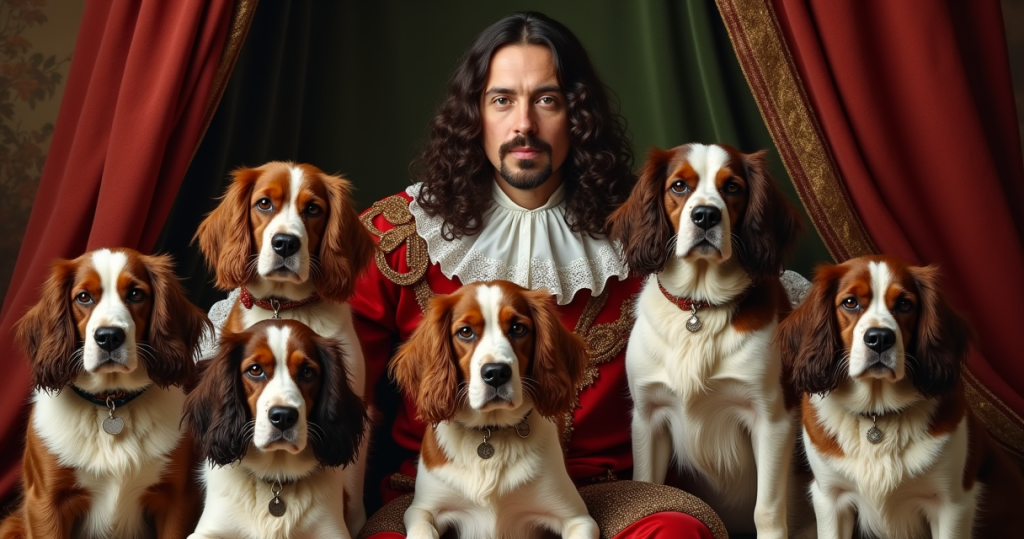
What Were Cavaliers Bred For?
Cavalier King Charles Spaniels were developed in Britain as toy spaniels – small companion dogs that also retained some sporting instincts.
History: Originally bred for nobility in the 17th century.
Purpose: Their primary role was companionship, sitting on laps and warming feet during chilly castle winters.
Modern role: Today, they are affectionate family companions, watchdogs in spirit (though not in size), and excellent therapy dogs.
See our Dog Breed History Guide for more origins.
4. Physical Characteristics
What Makes a Cavalier King Charles Spaniel Unique?
Cavalier King Charles Spaniels are small dogs, typically standing 12 to 13 inches tall and weighing between 13 and 18 pounds. They have a gentle, melting expression, framed by their large, round, dark eyes. Their coat is long, silky, and can be slightly wavy. Cavalier colours include:
- Blenheim: Rich chestnut markings on a pearly white background.
- Tricolour: Black and white with tan markings over the eyes, cheeks, inside ears, and on the underside of the tail.
- Ruby: A solid rich red colour.
- Black and Tan: Black with tan markings similar to the tricolour.
The Cavalier King Charles Spaniel’s face is longer compared to its cousin the King Charles Spaniel.
| Feature | Cavalier King Charles Spaniel | King Charles Spaniel (English Toy Spaniel) |
|---|---|---|
| Nose Length | Longer | Shorter, more “pushed-in” |
| Head Shape | Flatter skull | More domed skull |
| Weight | 13-18 pounds | 8-14 pounds |
| Overall Appearance | More athletic, agile | More compact, cobby |
5. Temperament and Personality
What’s Their True Nature?
Cavalier King Charles Spaniels are renowned for their affectionate and gentle nature. They are highly sociable dogs who thrive on human companionship and get along well with children, other dogs, and even cats, especially if raised together. They are playful but not overly energetic, making them adaptable to different lifestyles. They are eager to please and relatively easy to train.
Pros:
- Affectionate and loving
- Good with children and other pets
- Adaptable to different lifestyles
- Intelligent and trainable
- Relatively quiet (not excessive barkers)
Cons:
- Can suffer from separation anxiety if left alone for long periods
- Prone to certain health problems
- May chase small animals due to their spaniel heritage
Cavalier King Charles Spaniel Size & Growth Table
| Age | Height (approx.) | Weight (approx.) |
|---|---|---|
| 3 months | 20 cm | 2–3 kg |
| 6 months | 26 cm | 4–5 kg |
| 12 months | 30–33 cm | 5.5–8 kg |
6. Training and Socialisation
Raising a Well-Behaved Cavalier King Charles Spaniel
Early socialization is essential for Cavalier King Charles Spaniels to ensure they are well-adjusted and confident. Expose them to various sights, sounds, people, and other animals from a young age.
Training should be positive and reward-based. Cavaliers are eager to please, so they respond well to treats, praise, and toys. Consistency is key. Start with basic commands like “sit,” “stay,” and “come.” House training can be relatively easy with a consistent routine.
Cavaliers can be prone to separation anxiety, so it’s important to teach them to be comfortable alone. Start with short periods and gradually increase the time. Crate training can also provide a safe and secure space for them.
Concerned about your dog? Try our Pet Symptom Checker

7. Exercise and Activity Needs
Keeping Them Active and Happy
Cavalier King Charles Spaniels have moderate exercise needs. They enjoy walks, playtime, and exploring the outdoors, but they don’t require excessive amounts of exercise. A daily walk of 30-60 minutes, combined with some playtime in the yard or indoors, is usually sufficient.
They also enjoy mental stimulation, such as puzzle toys or training sessions. Games like fetch and hide-and-seek can keep them entertained.
| Activity | Duration/Frequency | Benefits |
|---|---|---|
| Daily Walk | 30-60 minutes | Physical exercise, mental stimulation, socialization |
| Playtime | 15-30 minutes | Exercise, bonding, mental stimulation |
| Puzzle Toys | Daily | Mental stimulation, prevents boredom |
| Training Session | 10-15 minutes | Reinforces commands, strengthens bond |
8. Nutrition and Dietary Needs
Feeding Your Cavalier King Charles Spaniel Right
Feed your Cavalier King Charles Spaniel a high-quality dog food that is specifically formulated for small breeds. Follow the feeding guidelines on the food packaging, and adjust the amount based on your dog’s age, weight, and activity level.
Cavaliers can be prone to weight gain, so it’s important to monitor their calorie intake and avoid overfeeding. Limit treats and table scraps.

A typical feeding schedule:
- Puppies (8-12 weeks): 4 meals per day
- Puppies (3-6 months): 3 meals per day
- Puppies (6-12 months): 2 meals per day
- Adults (1+ years): 2 meals per day
9. Grooming and Coat Care
Caring for Their Signature Look
Cavalier King Charles Spaniels have a long, silky coat that requires regular grooming to prevent mats and tangles. Brush them several times a week with a slicker brush and a metal comb. Pay special attention to the feathering on their ears, legs, and tail.
They need occasional baths, usually every few weeks, depending on their activity level and lifestyle. Use a dog-specific shampoo and conditioner to keep their coat healthy and shiny.
Trim their nails regularly to prevent overgrowth. Clean their ears regularly to prevent infections.
10. Common Health Issues
Staying Healthy and Happy
Cavalier King Charles Spaniels are prone to certain health problems, so it’s important to be aware of these risks and take preventative measures.
| Health Problem | Symptoms | Prevention/Management |
|---|---|---|
| Mitral Valve Disease (MVD) | Heart murmur, coughing, difficulty breathing, lethargy | Regular veterinary check-ups, echocardiograms, medication (if diagnosed) |
| Syringomyelia (SM) | Sensitivity to touch, neck scratching, pain, weakness, scoliosis | MRI scans for diagnosis, medication, surgery (in severe cases) |
| Hip Dysplasia | Lameness, stiffness, difficulty rising, pain | Maintaining a healthy weight, moderate exercise, physical therapy, surgery (in severe cases) |
| Eye Conditions (e.g., Cataracts, Progressive Retinal Atrophy) | Cloudiness of the lens, vision loss | Regular eye exams, genetic testing, surgery (for cataracts) |

Do Cavalier King Charles Spaniels Shed?
Yes, Cavaliers are moderate shedders.
Not hypoallergenic: They produce dander and shed hair, so they aren’t allergy-friendly.
Grooming needs: Regular brushing 3–4 times per week keeps shedding under control.
Ears: Long ears require cleaning to prevent infections.
11. Fun Facts
Did You Know?
- Cavalier King Charles Spaniels are known for their “Blenheim Spot,” a distinctive chestnut mark on the top of their head.
- President Ronald Reagan owned a Cavalier King Charles Spaniel named Rex.
- They are often used as therapy dogs due to their gentle and affectionate nature.
Owning a Cavalier in Australia
Popularity: Cavaliers are common in Australia but quality breeders are selective.
Lifestyle fit: Great for apartments and family homes alike.
Costs: Expect regular vet visits, grooming, and possibly higher insurance premiums due to breed health risks.
Rescue: Consider adoption through dedicated Cavalier rescue organisations.
12. Is a Cavalier King Charles Spaniel Right for You?
Who’s the Perfect Match?
Cavalier King Charles Spaniels are well-suited for a variety of owners, including families with children, seniors, and first-time dog owners. They are adaptable to apartment living as long as they receive sufficient exercise.
They thrive on human companionship, so they are best suited for owners who can provide them with plenty of attention and affection. They are not a good choice for owners who are away from home for long periods of time.
13. FAQs
Common Questions About Cavalier King Charles Spaniels
How much exercise does a Cavalier King Charles Spaniel need?
They need a daily walk of 30-60 minutes, plus some playtime.
Are they good with kids?
Yes, they are generally very good with children.
Do they shed a lot?
They shed moderately, with heavier shedding during the spring and fall.
Are Cavalier King Charles Spaniels easy to train?
Yes, they are intelligent and eager to please, making them relatively easy to train with positive reinforcement methods.
What were Cavalier King Charles Spaniels bred for?
Companionship for nobility – lap dogs with gentle sporting instincts.
Are Cavaliers good family dogs?
Yes, they are affectionate and gentle, especially with children.
Do Cavaliers bark a lot?
They alert to strangers but aren’t excessive barkers with training.
Do Cavaliers shed / are they hypoallergenic?
They shed moderately and are not hypoallergenic.
How big do Cavaliers get?
Around 30–33 cm tall and 5.5–8 kg in weight.
How long do Cavaliers live?
Most live 12–15 years.
What health problems are common in Cavaliers?
Heart disease (MVD), syringomyelia, joint issues, and eye problems.
What health tests should breeders do?
Cardiac exams, MRI scans, patella checks, and eye testing.
How much exercise do Cavaliers need?
A daily short walk plus playtime.
Are Cavaliers good with cats?
Generally yes, but early socialisation helps.
How can I prevent obesity in Cavaliers?
Measure meals carefully, avoid overfeeding, and maintain regular exercise.
What’s the difference between a Cavalier and a King Charles Spaniel (English Toy Spaniel)?
The Cavalier has a longer muzzle, is slightly larger, and has a more active personality.
14. Conclusion
Cavalier King Charles Spaniels are truly special dogs, offering a unique blend of beauty, affection, and gentle companionship. While potential owners should be aware of potential health issues, the joy and love these dogs bring to a home are immeasurable. Have a Cavalier King Charles Spaniel? Share your story in the comments below!

At Pet Care Community, our team of passionate pet lovers, writers, and veterinary-approved experts share reliable tips, guides, and resources to help you give your furry friends the happiest and healthiest life possible. From dog breeds and training advice to nutrition, wellness, and pet parenting hacks, we’re here to support every step of your journey as a pet parent.